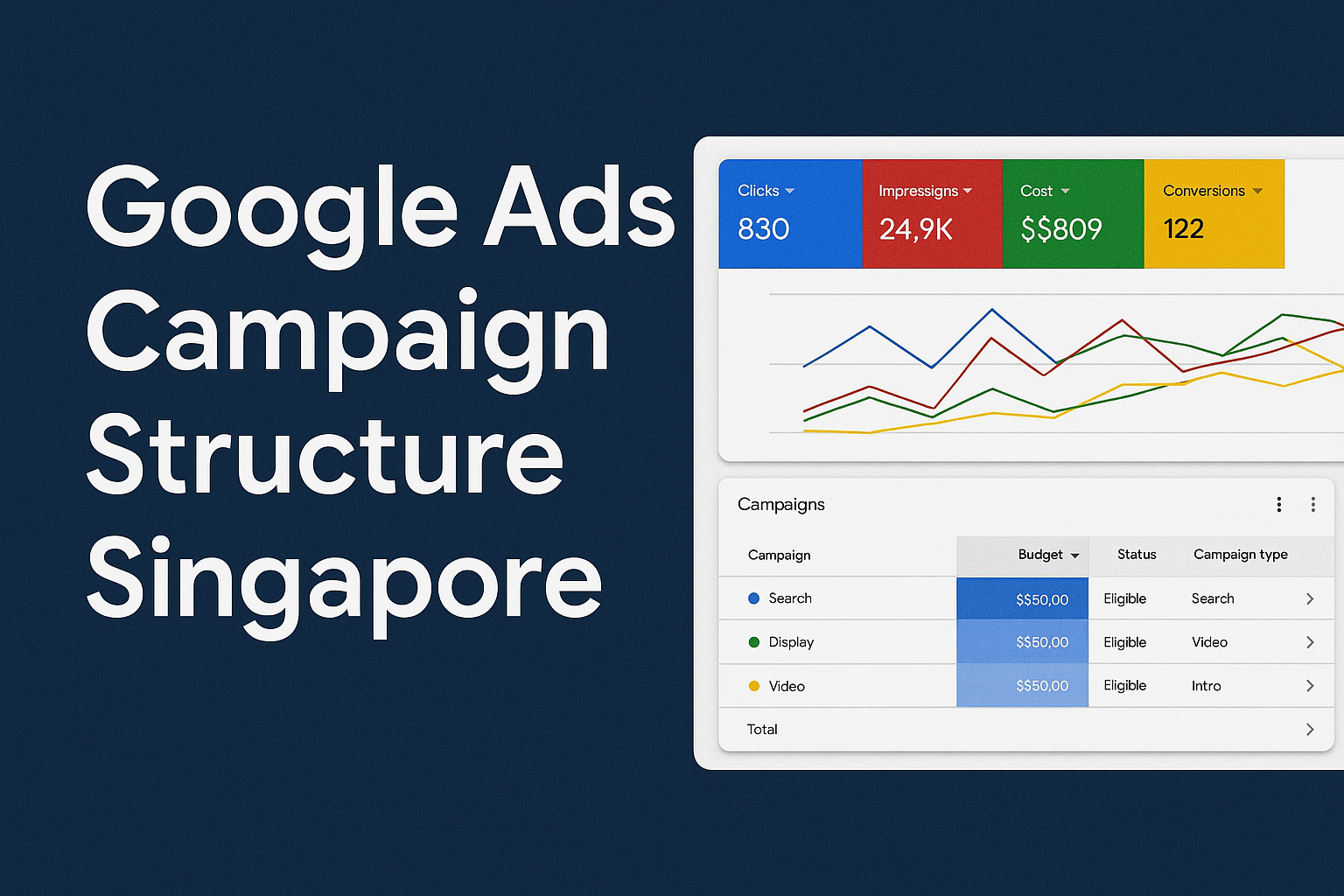
Running Google Ads without a clear campaign structure often leads to wasted ad spend and inconsistent performance. Many SMEs in Singapore struggle to understand how to properly set up Google Ads campaign structures that align with their business goals, audiences, and budgets.
A well-planned structure ensures clarity, control, and scalability, allowing you to optimise your SEM Singapore strategy effectively. Here’s your step-by-step roadmap to build a Google Ads campaign framework that converts clicks into measurable growth.
Step 1: Define Clear Campaign Objectives
Every effective ad campaign starts with a goal. Are you aiming to generate leads, boost e-commerce sales, or build brand awareness?
When you define objectives upfront, you can tailor ad formats, bidding strategies, and conversion actions more effectively. For example:
– Lead generation campaigns: Focus on form submissions or WhatsApp clicks.
– Sales campaigns: Optimise for transactions and cart values.
– Awareness campaigns: Prioritise reach and impression share.
For businesses combining SEO and paid ads, explore how integrated campaigns amplify ROI in this GOSG article.
Step 2: Structure by Product, Service, or Intent
Avoid mixing multiple offerings in a single campaign. Instead, organise by business objectives or audience intent.
Example of a well-structured Google Ads account:
– Campaign: “Web Design Services Singapore”
– Ad Group 1: “Corporate Website Design”
– Ad Group 2: “E-Commerce Website Design”
– Campaign: “SEO Packages Singapore”
– Ad Group 1: “SEO for SMEs”
– Ad Group 2: “Technical SEO Audit”
This type of segmentation allows better budget control and clearer performance tracking. For instance, if you’re promoting your web services, link directly to your Website Design service page to ensure relevance and stronger Quality Scores.
Step 3: Use Single Keyword Ad Groups (SKAGs) Where Possible
Grouping similar keywords together ensures your ads match user intent precisely.
For example:
– Ad Group 1: “Google Ads management Singapore”
– Ad Group 2: “SEM agency Singapore”
This setup helps Google understand your relevance better and increases your click-through rate (CTR). It’s a proven ad optimisation tactic used by GOSG’s Paid Ads team for high-performing campaigns.
Step 4: Optimise Ad Copy and Extensions
Strong ad copy directly affects CTR and Quality Score. Use compelling headlines that reflect search intent:
– “Boost Leads with Targeted Google Ads in Singapore”
– “Get Instant Results with Smart SEM Campaigns”
Don’t forget ad extensions, callouts, sitelinks, and structured snippets, to increase ad visibility. For content-driven ad strategies, refer to Singapore’s 2025 Content Marketing Revolution for ideas on crafting conversion-focused messages.
Step 5: Implement Data-Driven Tracking and Reporting
Tracking performance is where most campaigns fall short. Ensure that conversions, calls, form fills, WhatsApp messages, are accurately captured.
Integrate tools like Google Tag Manager and GA4 to monitor user behaviour. You can further enhance insights using GOSG’s Reporting & Analytics Service for custom dashboards and attribution models that identify your most valuable clicks.
Step 6: Continuous Optimisation and Budget Reallocation
SEM in Singapore is competitive, and market trends change rapidly. Review your campaigns weekly:
– Pause low-performing keywords
– Shift budgets to high-ROAS ad sets
– Test new creatives or landing pages
Stay agile. Consistent data reviews are key to maintaining profitability. You can see how GOSG leverages analytics in this case study.
Conclusion
A well-structured Google Ads campaign in Singapore is more than setup, it’s strategy, testing, and data-driven refinement. With the right structure, SMEs can turn ad spend into predictable growth and consistent lead generation.
Get in touch with GOSG Consulting today to build a Google Ads strategy that maximises ROI and supports your long-term digital marketing goals.
FAQs
1. What’s the most common mistake in Google Ads campaign setup?
Mixing too many products or services in one campaign, which leads to poor ad relevance and higher CPC.
2. How often should I review my Google Ads campaigns?
Weekly reviews are recommended to adjust bids, refine keywords, and monitor performance metrics.
3. Can I run both Google Search and Display campaigns together?
It’s best to separate them, each serves different user intents and requires distinct strategies.
4. What budget should a Singapore SME start with?
A good starting point is $1,000–$2,000/month per campaign for sufficient data and optimisation cycles.