Author: contact@gosgconsulting.com

  • Content Marketing Singapore: Case Study for Singapore Businesses

    In Singapore’s fast-paced digital landscape, businesses face a common challenge, creating content that not only attracts visitors but also converts them into customers. This case study explores how GOSG Consulting implemented a content marketing Singapore strategy for a local SME to increase visibility, engagement, and qualified leads within just 90 days.

    The Challenge: Inconsistent Content and Low Lead Quality

    A B2B company in Singapore approached GOSG with a problem familiar to many SMEs: they were posting regularly on their blog and social channels but seeing little to no measurable results.

    Key issues identified during the initial audit included:
    – Disconnected content themes not aligned with buyer intent
    – Poor keyword targeting and low search visibility
    – Limited internal linking and poor content depth
    – No tracking for lead conversions or engagement metrics

    These factors contributed to stagnant traffic growth and unqualified leads from organic channels.

    The Strategy: Data-Driven Content Marketing Framework

    GOSG designed a content marketing Singapore strategy focused on measurable business outcomes, not just publishing for the sake of volume. The framework combined data insights, SEO alignment, and storytelling to create a full-funnel content ecosystem.

    1. Keyword and Audience Mapping

    The first step involved identifying high-intent keywords tied to customer pain points. Using Ahrefs and GA4, we segmented content into three categories:
    – Awareness: Educational articles to build trust
    – Consideration: Comparison pieces and listicles
    – Decision: Service-driven landing pages

    Learn more about how SEO content strategy scales brand awareness in this GOSG case study on integrated SEO campaigns.

    2. Content Architecture and Internal Linking

    We restructured the client’s website content into strategic topic clusters, linking related articles to strengthen authority and improve dwell time. Each blog post included links to related services and pillar content for maximum ranking potential.

    See an example of this content-to-service connection model in this GOSG SEO framework article.

    3. Long-Form Content Production and SEO Optimization

    We produced long-form blog articles (1,200–1,500 words) optimised for both readability and SERP performance. Each piece included structured headers (H2s/H3s), internal linking, and clear CTAs.

    The editorial calendar also included two case study-style posts each month to demonstrate expertise and build brand authority. You can learn more about content storytelling for ROI in this GOSG brand marketing success article.

    4. Analytics and Continuous Optimisation

    To track progress, we built a Looker Studio dashboard integrating GA4, Google Search Console, and Meta Insights. This allowed the client to monitor performance indicators such as average session duration, conversions, and content-driven leads.

    For a deeper look into analytics and content measurement, explore GOSG’s Reporting & Analytics service.

    The Results: 90 Days of Measurable Growth

    MetricBefore GOSGAfter 90 Days
    Organic Traffic1,200/month3,400/month (+183%)
    Leads from Blog CTAs6/month24/month (+300%)
    Average Session Duration00:5401:47 (+97%)
    Top 10 Keyword Rankings319 (+533%)


    These results proved the direct impact of structured, data-backed content marketing on lead generation and brand visibility.

    Key Lessons Learned

    1. Consistency matters more than volume. Posting fewer, high-quality articles yields stronger SEO and engagement gains.
    2. Internal linking builds authority. Google rewards clear content relationships and semantic relevance.
    3. Analytics is non-negotiable. Without tracking, you can’t measure ROI or identify what works.

    Businesses that treat content as a performance channel, not a side task, see faster and more sustainable results.

    Conclusion

    This content marketing Singapore case study highlights the power of integrating SEO, storytelling, and analytics to drive real business growth. A well-structured strategy not only boosts organic reach but also builds credibility and long-term customer relationships.

    Get in touch with GOSG Consulting today to develop a content marketing framework that delivers measurable results.

    FAQs

    1. How long does it take to see content marketing results in Singapore?
    Typically 2–3 months for initial growth, depending on site authority and keyword competition.

    2. What makes GOSG’s approach unique?
    We focus on measurable impact, combining SEO, storytelling, and analytics to create ROI-driven strategies.

    3. How often should I post new content?
    At least 4–6 posts per month for steady growth and engagement.

    4. Can small businesses afford professional content marketing?
    Yes, GOSG offers scalable packages suited for SMEs of all sizes.

  • Landing Page Design Singapore: Best Practices for Singapore Businesses

    Landing Page Design Singapore: Best Practices for Singapore Businesses

    Your website’s landing page is where first impressions are made, and in Singapore’s competitive online market, that impression must convert. Whether you’re running Google Ads or social campaigns, your landing page design Singapore determines whether visitors take action or bounce.

    This guide breaks down step-by-step how to create landing pages that attract, engage, and convert, blending design psychology with performance data.

    Step 1: Define a Clear Conversion Goal

    Every landing page should have one purpose, whether it’s collecting leads, selling a product, or scheduling a consultation. Avoid multiple CTAs that distract users from your primary objective.

    For instance, a strong “Book Now” or “Get Free Quote” button above the fold instantly guides visitors toward action.

    To see how user-focused design drives conversions, explore this GOSG web design case study.

    Step 2: Craft Compelling Headlines and Value Propositions

    Your headline is your hook. It must clearly answer: “What’s in it for me?”

    Singapore audiences respond best to concise, results-driven messaging. Use subheadings to reinforce benefits, not just features.
    For example:
    > “Grow your brand with an SEO-optimised website that converts visitors into leads.”

    For headline and content synergy tips, check out GOSG’s SEO strategy guide.

    Step 3: Design for Speed and Mobile Responsiveness

    With over 90% of Singapore’s web traffic coming from mobile devices, responsive landing page design is no longer optional. Slow-loading pages cost you conversions, research shows that every extra second of load time can reduce conversions by 20%.

    GOSG ensures high-performing landing pages through optimised code and clean UX structures. Learn more through our Website Design service.

    Pro Tip:
    Use Google PageSpeed Insights to test performance regularly and prioritise mobile-first layouts.

    Step 4: Use Visual Hierarchy to Guide the User Journey

    Design elements should naturally guide the eye toward your CTA. Leverage contrast, white space, and directional cues (like arrows or image gaze direction) to focus attention.

    Add social proof such as client logos or testimonials near the conversion area to build trust instantly.

    Discover how layout design enhances storytelling in this GOSG content marketing article.

    Step 5: A/B Test and Optimise with Analytics

    The most effective landing pages are continuously tested and refined. Use analytics tools like Google Optimize or Meta Business Suite Experiments to A/B test headlines, images, and CTA button placements.

    GOSG’s Reporting & Analytics service helps businesses in Singapore measure every landing page click, ensuring ROI is tracked with precision.

    Pro Tip:
    Even subtle changes, like CTA colour or button text, can raise conversion rates by 10–30%.

    Conclusion

    A high-performing landing page design Singapore isn’t about visuals alone, it’s about strategy. By combining strong messaging, mobile optimisation, and data-backed testing, you can turn your landing page into a consistent lead-generation tool.

    Get in touch with GOSG Consulting today to build landing pages designed to convert from day one.

    FAQs

    1. What is a landing page?
    A standalone web page designed to drive a single conversion action such as sign-ups or purchases.

    2. How many CTAs should a landing page have?
    Ideally one main CTA to maintain focus and clarity.

    3. Should I use videos on my landing page?
    Yes, short videos can boost engagement, but keep file sizes small for fast loading.

    4. What tools can help me design landing pages?
    Tools like Figma, Elementor, and Unbounce are commonly used for creating high-performing landing pages.

  • Instagram Ads Singapore: Trends for Singapore Businesses

    Instagram Ads Singapore: Trends for Singapore Businesses

    As social media continues to dominate digital marketing, Instagram Ads in Singapore have evolved from simple brand awareness tools into precision-driven sales engines.

    With over 3.6 million active Instagram users in Singapore, businesses that understand ad formats, audience behaviour, and algorithm changes can stay ahead of competitors. This guide explores the latest trends shaping Instagram Ads Singapore, and how SMEs can apply them for stronger ROI and engagement.

    Step 1: Embrace Reels and Short-Form Video Advertising

    Reels have become the top-performing format for engagement on Instagram, with average reach rates exceeding traditional image posts by 22%. Brands are now shifting budget toward vertical, sound-on creative that mirrors organic content while promoting brand storytelling.

    If you want to learn how content and ad synergy drive conversions, check out this GOSG guide on website design and lead generation.

    Pro Tip:
    Keep Reels between 6–15 seconds with clear CTAs like “Shop Now” or “Learn More” to maintain attention span and boost conversions.

    Step 2: Optimise Targeting Using AI and Lookalike Audiences

    Meta’s AI targeting tools have become increasingly accurate, analysing signals from user interactions across Facebook and Instagram. Singapore businesses can leverage Advantage+ Audience features to reach customers beyond standard demographics, using real-time purchase and engagement data.

    For deeper insights into campaign automation and optimisation, explore GOSG’s Paid Ads service to see how machine learning improves ROI.

    Pro Tip:
    Use custom audiences from your existing website traffic or customer lists, then let AI expand the reach automatically for performance scaling.

    Step 3: Combine Instagram Shopping with Lead Generation Ads

    Instagram is no longer just a brand discovery platform, it’s a direct sales channel. With Instagram Shopping, SMEs can now tag products, display prices, and drive instant conversions without users leaving the app.

    By combining shoppable posts with Lead Generation Ads, Singapore businesses can collect email leads or WhatsApp messages directly within Meta’s ecosystem.

    You can see how integrated campaign strategies enhance conversion funnels in this GOSG content marketing success framework.

    Step 4: Leverage Story Ads for Authentic Engagement

    Stories remain one of the highest-performing ad placements on Instagram, with over 70% of users engaging daily. Authenticity is key, people respond to real-life visuals, testimonials, and interactive elements like polls or countdowns.

    Pair storytelling with localised context. For example, use Singapore-specific festivals, food culture, or trending hashtags to make your ads relatable.

    Learn how brand storytelling translates to engagement in this GOSG digital marketing insights post.

    Step 5: Track Analytics to Refine Creative and Placement

    Instagram’s in-app analytics and Meta Business Suite allow marketers to test creative variations, audience groups, and placements efficiently. Consistent analysis of reach, engagement rate, and cost per conversion helps businesses optimise campaigns for better ROI.

    For advanced performance dashboards and data automation, see GOSG’s Reporting & Analytics service.

    Pro Tip:
    Evaluate cost per result weekly. If results dip, rotate creatives or refresh headlines to avoid audience fatigue.

    Conclusion

    The future of Instagram Ads Singapore lies in creativity powered by data. SMEs that combine authentic storytelling with smart automation can build campaigns that convert followers into paying customers.

    Get in touch with GOSG Consulting today to build Instagram Ads that resonate, perform, and scale profitably.

    FAQs

    1. Are Instagram Ads effective for small businesses in Singapore?
    Yes, especially when targeting is precise and creatives are localised.

    2. How much budget should I start with for Instagram Ads?
    Start with SGD 500–1,000/month, then scale based on results.

    3. What’s the difference between boosting a post and running an ad campaign?
    Boosting increases reach temporarily, while ad campaigns are data-driven and performance-tracked.

    4. How do I know if my Instagram Ads are working?
    Monitor CTR, ROAS, and conversions in Meta Business Suite to measure effectiveness.

  • Google Ads vs SEO Singapore: Insights for Singapore Businesses

    Google Ads vs SEO Singapore: Insights for Singapore Businesses

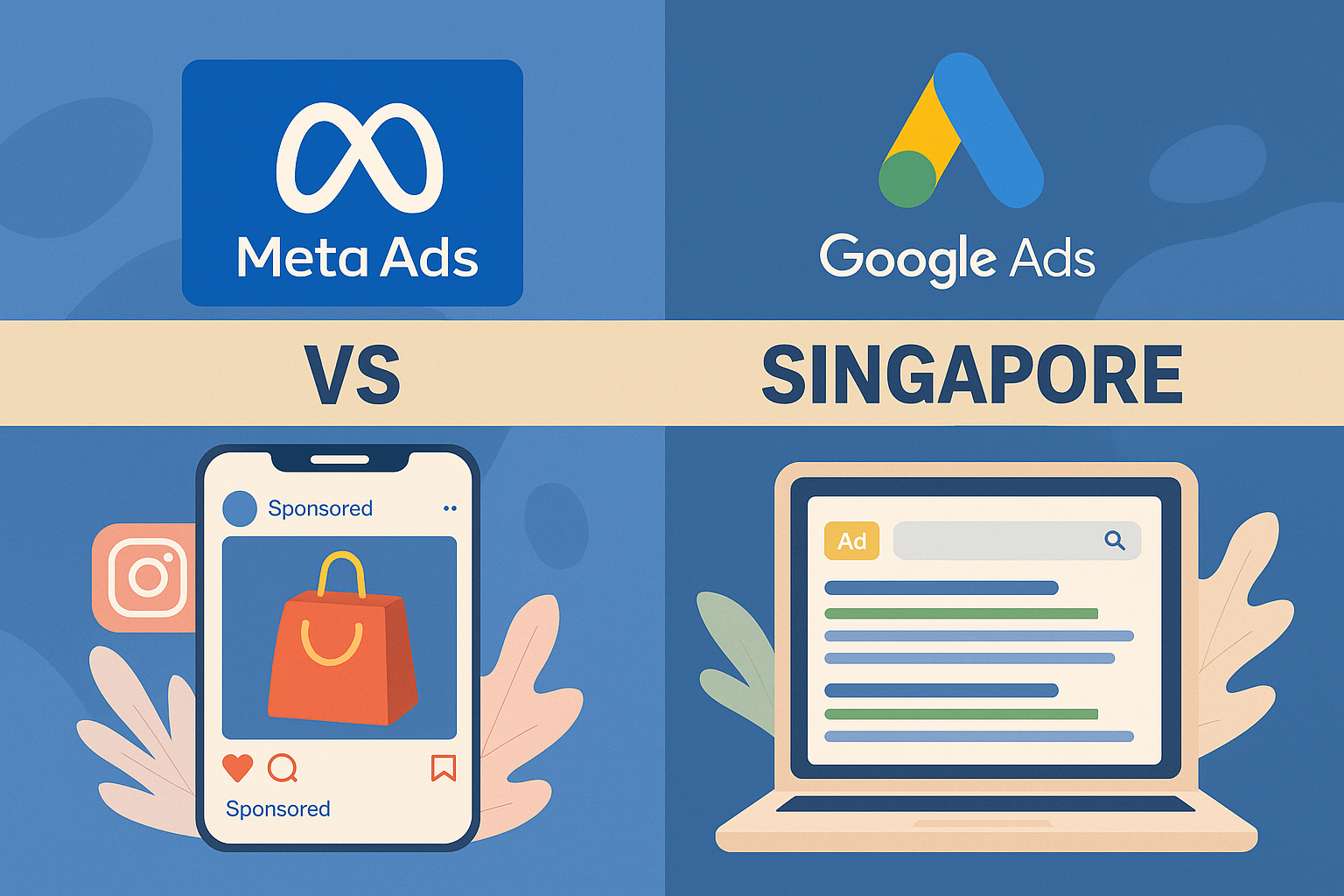
    When it comes to digital marketing, the biggest debate for Singapore businesses often comes down to one question: Should we invest in Google Ads or SEO?

    Both channels drive visibility on Google, but they operate very differently. SEO focuses on organic, long-term growth, while Google Ads offers instant visibility through paid placements.

    This comparison breaks down the strengths, weaknesses, and ideal use cases for Google Ads vs SEO Singapore, helping you make data-driven budget decisions that maximise ROI.

    Understanding the Core Difference

    AspectGoogle Ads (SEM)SEO (Search Engine Optimisation)
    Cost ModelPay-per-click (PPC)No direct cost per click
    Results SpeedImmediateGradual (3–6 months)
    LongevityStops when ads stopCompounds over time
    ControlHigh — full budget and targeting controlModerate — algorithm-dependent
    PlacementAppears above organic resultsRanks organically
    TrackingInstant data via Google Ads DashboardLong-term data via Google Analytics and Search Console

    When managed strategically, both channels can complement each other: Google Ads for short-term acquisition and SEO for sustainable growth.

    Google Ads: Speed and Precision Targeting

    Google Ads is perfect for businesses that need fast results or have limited launch windows (e.g., events, promotions, or new product rollouts).

    Its biggest advantage lies in target precision, you can target specific demographics, devices, and even localities like “near me” searches in Singapore.

    Advantages

    – Immediate website traffic and conversions
    – Precise location and keyword targeting
    – Measurable ROI within days
    – Full control over ad copy, budget, and bidding strategy

    Discover how structured campaigns drive better ROI in this GOSG Google Ads management case study.

    Limitations

    – Requires ongoing budget, stop spending, and visibility disappears
    – Competitive industries like finance or insurance can see CPCs above SGD $10
    – Short-term focus without continuous optimisation

    For step-by-step optimisation frameworks, explore GOSG’s Paid Ads service.

    SEO: Building Sustainable Authority

    Unlike Google Ads, SEO is an investment that continues to pay dividends long after the initial work is done. It involves optimising your website for search intent, structure, and content relevance.

    When executed properly, SEO builds trust, authority, and organic discoverability, which are essential for long-term visibility in Singapore’s competitive online ecosystem.

    Advantages

    – Consistent, compounding traffic growth
    – Builds domain authority and credibility
    – Lower long-term cost per acquisition
    – Aligns with Google’s evolving AI search models

    Learn how structured content creation amplifies organic growth in this GOSG SEO writing strategy article.

    Limitations

    – Takes time (3–6 months) to see measurable results
    – Requires ongoing optimisation and content refreshes
    – More algorithm-sensitive than paid campaigns

    For foundational improvements, GOSG’s SEO services integrate both on-page and technical frameworks for sustained ranking improvements.

    When to Use Google Ads vs SEO in Singapore

    Business ScenarioRecommended ChannelReason
    New product or launchGoogle AdsInstant visibility and conversions
    Limited budget, long-term growthSEOLower cost per lead over time
    Seasonal promotions or eventsGoogle AdsQuick engagement and tracking
    Established brand improving organic reachSEOBuilds long-term domain authority
    Businesses needing leads fastGoogle AdsPredictable and measurable

    Cost Comparison in Singapore

    ChannelAverage Monthly CostROI Timeline
    Google AdsSGD $1,000 – $10,000+Immediate (days to weeks)
    SEOSGD $1,200 – $4,000Mid to long term (3–6 months)

    For an example of integrated performance growth, see this GOSG multi-channel success framework.

    Expert Insight: Why Integration Wins

    Businesses that combine both channels often see 25–40% higher ROI than those relying on one alone. SEO insights can identify high-performing keywords that can be scaled through Ads, while Ads data helps refine organic content targeting.

    Learn how this synergy drives results in GOSG’s digital marketing strategy article.

    Conclusion

    Both Google Ads and SEO are vital tools in a marketer’s toolkit, but the best results come when they’re used together.

    Google Ads provides instant visibility, while SEO builds lasting credibility. By aligning both strategies under one analytics framework, your business can maximise every click and conversion.

    Get in touch with GOSG Consulting today to build a unified Google Ads and SEO strategy that drives real, measurable business growth.

    FAQs

    1. Is SEO better than Google Ads in Singapore?
    Neither is “better”, SEO is long-term and cost-efficient, while Google Ads is fast and targeted.

    2. Can I run SEO and Google Ads together?
    Yes, combining both creates stronger data insights and accelerates growth.

    3. What is the best budget split between SEO and Ads?
    Many SMEs start with a 60/40 split: 60% SEO for sustainability, 40% Ads for immediate leads.

    4. How long should I run Google Ads before switching to SEO?
    Ideally 3–6 months, using Ads data to identify profitable keywords for SEO campaigns.

  • Technical SEO Singapore: Strategies for Singapore Businesses

    Technical SEO Singapore: Strategies for Singapore Businesses

    In Singapore’s digital marketplace, having strong content isn’t enough, your website must also perform flawlessly behind the scenes. Technical SEO forms the foundation that allows search engines to crawl, index, and rank your site efficiently.

    In this case study, we’ll explore how GOSG implemented a comprehensive technical SEO Singapore strategy for a local SME, improving both site performance and organic visibility within three months.

    The Challenge: Slow Website and Crawling Issues

    A mid-sized Singapore business approached GOSG after noticing stagnant organic traffic and inconsistent keyword rankings despite regular content updates.

    Upon technical audit, our team identified several issues:
    – Unoptimised site structure
    – Duplicate meta tags and missing canonical URLs
    – Heavy image files slowing down load time
    – Poor mobile responsiveness
    – Inefficient internal linking

    These factors reduced the site’s visibility on Google, especially for localised searches like “SEO company Singapore” and “digital marketing Singapore.”

    The Solution: Comprehensive Technical SEO Framework

    Our technical team implemented a structured, data-driven process to rebuild the site’s technical foundation without altering its branding or content strategy.

    1. Site Speed and Core Web Vitals Optimisation

    We compressed images, enabled browser caching, and minified CSS/JS files. The result: a 67% reduction in average load time and improved user experience across devices.

    Learn more about how performance metrics affect lead generation in this GOSG case study on data-driven success.

    2. Mobile-First and Responsive Design Implementation

    Since over 90% of users in Singapore browse on mobile, responsiveness was prioritised. The layout was rebuilt using a mobile-first approach to enhance engagement and lower bounce rates.

    This process was guided by insights similar to GOSG’s web design lead generation framework, ensuring aesthetics and performance worked hand in hand.

    3. Structured Data and Schema Markup Integration

    We implemented schema for products, services, and FAQs to improve rich result visibility on Google SERPs. This structured approach enhanced the site’s CTR by over 22% within 45 days.

    For comparison, you can explore advanced content optimisation insights in this strategic content writing article.

    4. Fixing Crawl Budget and Indexation Errors

    Our technical SEO audit revealed duplicate URLs, 404 errors, and poor canonicalisation. Using Search Console and Screaming Frog, we prioritised high-value pages and optimised robots.txt to maximise crawl efficiency.

    We also enhanced internal linking to help Google identify important content faster. See how internal architecture affects discoverability in this integrated campaigns guide.

    5. Analytics and Reporting Integration

    GOSG implemented GA4 tracking and Looker Studio dashboards to monitor technical KPIs, including site speed, crawl success rate, and Core Web Vitals.

    This allowed the client to visualise SEO progress in real time using GOSG’s reporting and analytics services.

    The Results: Tangible Growth in 90 Days

    After implementing these technical SEO solutions, the website achieved:
    – 38% increase in organic traffic
    – 26% boost in keyword rankings on page one
    – 45% faster mobile load time
    – 20% higher conversion rate from organic leads

    These metrics were verified using GA4 and Google Search Console data.

    Through continuous technical monitoring and reporting, the client maintained ranking stability even after multiple Google algorithm updates.

    Lessons Learned

    1. Technical SEO is not a one-time fix, it’s an ongoing process of monitoring and optimisation.
    2. Performance directly impacts conversions, a one-second delay can cost leads and revenue.
    3. Automation and analytics make it easier to identify bottlenecks before they hurt rankings.

    By combining technical precision with business insight, GOSG helped transform a struggling SME website into a high-performing digital asset.

    Conclusion

    The foundation of a strong online presence lies in technical SEO Singapore practices that prioritise performance, structure, and data integrity.

    With the right framework, your business can achieve faster load times, higher visibility, and measurable growth.

    Get in touch with GOSG Consulting today to schedule your technical SEO audit and start building a website that ranks and converts.

    FAQs

    1. What is technical SEO?
    It focuses on optimising the website’s backend structure, speed, and crawlability to enhance search engine visibility.

    2. How long does it take to see technical SEO results?
    Typically 2–3 months for noticeable improvements in rankings and traffic, depending on site size.

    3. Is technical SEO important for small businesses in Singapore?
    Absolutely. Even small technical errors can prevent your website from appearing in local searches.

    4. What tools does GOSG use for technical SEO audits?
    We use Screaming Frog, Google Search Console, PageSpeed Insights, and Looker Studio for comprehensive reporting.

  • Analytics and Reporting Singapore: Guide for Singapore Businesses

    Analytics and Reporting Singapore: Guide for Singapore Businesses

    In today’s data-driven market, businesses in Singapore are shifting from intuition-based decisions to insight-backed strategies. The ability to track, analyse, and visualise performance data determines whether your marketing campaigns generate true ROI or just impressions.

    This comprehensive guide to analytics and reporting in Singapore helps business owners and marketing managers understand how to turn raw data into measurable business growth through structured reporting systems.

    What Is Analytics and Reporting in Digital Marketing?

    Analytics and reporting involve collecting, processing, and interpreting performance data from multiple sources, such as your website, ad platforms, and CRM.

    While analytics uncovers what is happening (e.g., low conversion rate on a landing page), reporting summarises that data to communicate why it matters and what action should follow.

    When integrated correctly, analytics empowers teams to make informed decisions that directly improve campaign efficiency, user experience, and profitability.

    Why Analytics and Reporting Matter for Singapore Businesses

    Singapore’s competitive digital landscape makes every marketing dollar count. Without a clear understanding of how each channel performs, many SMEs overspend on ads that don’t convert.

    Here’s why proper analytics setup is crucial:
    – Clarity: Identify which platforms bring the most ROI.
    – Efficiency: Allocate budgets where conversions are strongest.
    – Accountability: Track KPIs for each campaign, team, or channel.
    – Forecasting: Use historical data to predict trends and adjust strategies early.

    Learn how analytics transforms ROI in this GOSG digital campaigns performance article.

    Key Components of Effective Analytics and Reporting Systems

    1. Data Collection and Integration

    Start by consolidating all your data source: Google Analytics 4 (GA4), Meta Ads Manager, Google Ads, CRM systems, and email platforms.

    A centralised analytics setup ensures clean data and prevents inconsistencies. GOSG integrates these touchpoints into cohesive dashboards through its Analytics services, creating a single source of truth for business reporting.

    2. KPI Definition and Goal Setting

    Every report begins with identifying your KPIs (Key Performance Indicators). These can include:
    – Conversion rate (leads or sales)
    – Cost per acquisition (CPA)
    – Return on ad spend (ROAS)
    – Website engagement metrics (CTR, session duration, bounce rate)

    Each KPI should tie back to your core business goals. For example, a B2B company may focus on form fills, while an e-commerce brand prioritises sales volume.

    See how clear KPI mapping boosts efficiency in this Singapore SME growth framework.

    3. Visualising Data with Dashboards

    Raw data means little without visual context. Dashboards in tools like Looker Studio (formerly Google Data Studio) turn spreadsheets into visual stories.

    By integrating Google Ads, Meta, and SEO data, you can track performance across channels in real time. Discover how visualization streamlines decision-making.

    4. Reporting Frequency and Structure

    Your report cadence depends on your business model:
    – Weekly reports help identify trends early.
    – Monthly summaries show performance impact and budget insights.
    – Quarterly reviews reveal strategic patterns and long-term growth.

    GOSG’s Reporting and Insights service tailors analytics frameworks to each client’s workflow, ensuring reports remain relevant and actionable.

    5. Automation and Real-Time Tracking

    Manual reporting takes hours, automation saves that time for strategy. Use APIs and connector tools (e.g., Supermetrics, Zapier) to sync live data into dashboards.

    Automated reports ensure accuracy while enabling marketers to pivot instantly when performance shifts.

    Find out how automation supports digital growth in this lead generation strategy article.

    How to Build a Data-Driven Culture in Your Organisation

    Data literacy is no longer optional. Training employees to interpret analytics builds confidence and autonomy in decision-making.

    Share dashboards across teams to align marketing, sales, and management around shared KPIs.

    Use insights to make iterative improvements rather than one-off fixes. 

    See how iterative optimisation transforms conversions in this website performance audit example

    Analytics Tools Commonly Used by Singapore Businesses

    ToolPurposeBenefit
    Google Analytics 4 (GA4)Tracks user behaviour and eventsCross-platform tracking and predictive insights
    Google Tag Manager (GTM)Manages tracking codesEasier event tracking without developer support
    Looker StudioCustom dashboards and visual reportsConsolidates multiple data sources
    Meta Business SuiteTracks Facebook & Instagram AdsMeasures engagement and conversions
    Google Ads ReportsMonitors ad spend and ROASOptimises bids and ad targeting

    Common Mistakes to Avoid in Analytics and Reporting

    1. Tracking too many metrics: focus on those that impact business goals.
    2. Ignoring attribution models: know which channels drive actual conversions.
    3. Not validating data accuracy: cross-check tracking setup regularly.
    4. Failing to act on insights: reports are valuable only when paired with execution.

    Conclusion

    Strong analytics and reporting in Singapore don’t just measure performance, they unlock smarter strategies and higher ROI.

    By integrating the right tools, defining clear KPIs, and building a data-driven mindset, SMEs can turn reports into powerful decision-making assets.

    Get in touch with GOSG Consulting today to set up automated dashboards and discover how real-time insights can scale your business growth.

    FAQs

    1. What’s the difference between analytics and reporting?
    Analytics interprets data for decision-making, while reporting summarises performance data for presentation.

    2. What tools should I use for marketing analytics in Singapore?
    GA4, Looker Studio, and Meta Business Suite are top choices for unified visibility.

    3. How often should I review reports?
    Weekly for operational insights and monthly for budget and strategy adjustments.

    4. Can small businesses afford advanced analytics tools?
    Yes, many tools like Looker Studio and GA4 are free or low-cost with enterprise-grade capabilities.

  • Website Design for SMEs Singapore: Tips for Singapore Businesses

    Website Design for SMEs Singapore: Tips for Singapore Businesses

    For many Singapore SMEs, a website isn’t just a digital brochure, it’s the foundation of lead generation and brand credibility. Yet, business owners often underestimate the strategy behind effective website design for SMEs in Singapore.

    From slow loading speeds to unclear navigation, these issues can quietly drain conversions. This expert guide by GOSG shares proven tips to help SMEs transform their websites into revenue-generating assets.

    Tip 1: Define a Clear Business Goal

    Your website should have one purpose: drive measurable results, whether that’s inquiries, sales, or bookings. Every element, from layout to copy, should funnel users toward that goal through clear calls-to-action (CTAs) and intuitive navigation.

    For example, GOSG’s Website Design service ensures design strategy aligns with conversion goals so every visitor journey supports tangible outcomes.

    Tip 2: Prioritise Mobile-First Design

    With over 90% of Singapore’s users browsing on mobile, responsiveness is non-negotiable. But mobile-first design goes beyond scaling, it’s about rethinking layout, font size, and CTAs for thumbs, not cursors.

    Read more about how mobile performance directly impacts lead generation in this article on building lead generation funnels through content marketing.

    Tip 3: Showcase Authentic Brand Personality

    Stock images and generic templates make your brand invisible. Use real team photos, behind-the-scenes visuals, and testimonials to create trust and relatability.

    Authenticity is what sets SMEs apart. Learn how Singapore brands use content to drive emotional engagement in this digital campaigns strategy guide.

    Tip 4: Integrate SEO and Fast Load Times

    A visually stunning website won’t perform if it’s not found. Your design must integrate on-page SEO fundamentals:
    – Keyword-optimised headings and meta tags
    – Lightweight, compressed images
    – Logical URL and navigation structure

    You can explore advanced SEO performance tips in this GOSG SEO strategy article to improve search visibility and site speed simultaneously.

    Tip 5: Leverage Analytics for Data-Driven Growth

    Website analytics reveal what’s working, and what’s not. Tools like GA4 and Looker Studio can show your highest-converting pages, drop-off points, and traffic sources.

    With GOSG’s Reporting service, SMEs can turn these insights into actionable strategies, making every page a measurable driver of ROI.

    Conclusion

    Great website design for SMEs in Singapore combines creativity with strategy. When design, SEO, and analytics align, your site doesn’t just look good, it sells.

    Get in touch with GOSG Consulting today to transform your SME website into a performance-driven digital engine that grows your business.

    FAQs

    1. Why is website design crucial for SMEs in Singapore?
    It determines how efficiently your brand attracts, engages, and converts online visitors into customers.

    2. How often should an SME update its website?
    Every 2–3 years for design refreshes, and quarterly for SEO or content updates.

    3. What is the average cost of SME website design in Singapore?
    Between SGD 2,000–8,000 depending on functionality, integrations, and content depth.

    4. Should I use a website template or a custom build?
    Templates work for startups, but custom designs provide stronger branding and scalability for established SMEs.

  • Facebook Ads Singapore: Playbook for Singapore Businesses

    Facebook Ads Singapore: Playbook for Singapore Businesses

    Facebook remains one of the most powerful digital advertising platforms in Singapore, with over 5.6 million active users. Yet many SMEs struggle to see consistent ROI from their campaigns. Poor targeting, weak creatives, and neglected tracking setups often drain budgets before results appear.

    This Facebook Ads Singapore playbook walks you through the essential steps to plan, launch, and optimise campaigns that convert leads into paying customers.

    Step 1: Define Your Campaign Objective

    Before launching any ad, determine what you want to achieve: awareness, consideration, or conversion. Facebook’s campaign structure is built around these three pillars, and choosing the wrong objective can derail performance.

    Example:
    – Brand Awareness – Reach more people at the top of the funnel.
    – Lead Generation – Collect names and emails directly within Facebook.
    – Sales/Conversions – Send users to your website or landing page to purchase.

    If your goal is lead generation, align your website form or landing page with the campaign, similar to what’s shown in this content marketing strategy example.

    Step 2: Understand Singapore’s Audience Segments

    Facebook’s ad targeting options let you pinpoint your audience by location, demographics, and interests.

    For Facebook Ads Singapore, consider the following high-performing audience groups:
    – Professionals aged 25–45 in business districts such as Orchard, Raffles Place, and Marina Bay.
    – Shoppers interested in e-commerce, fashion, or food delivery services.
    – Parents seeking enrichment or family-related products.

    GOSG’s Social Media Management Service helps businesses segment and retarget effectively based on real campaign data, ensuring every ad dollar reaches the right audience.

    Step 3: Craft High-Converting Ad Creatives

    Visual storytelling drives Facebook engagement. Keep your creatives:
    – Clean, bright, and on-brand
    – Optimised for 1:1 and 4:5 formats
    – Paired with strong CTAs such as Shop Now, Book Today, or Learn More

    Combine image ads with short videos to diversify reach. For inspiration on content that converts, explore this GOSG article on brand marketing best practices.

    Step 4: Set Up Campaign, Ad Sets, and Ads Properly

    Facebook campaigns are structured in three layers:
    1. Campaign level – defines your objective (e.g., lead generation).
    2. Ad set level – sets your audience, placement, and budget.
    3. Ad level – includes creative and copy.

    Organise ad sets by audience type or interest to measure performance easily. For example:
    – Ad Set 1: Entrepreneurs and SME Owners
    – Ad Set 2: Marketing Professionals
    – Ad Set 3: Retargeted Visitors

    For reference on how structure impacts conversions, check this SEO strategy framework, the same logic applies in paid campaigns.

    Step 5: Optimise and Test Continuously

    Facebook Ads thrive on data. Review your campaigns at least twice a week to refine targeting, test new creatives, and adjust budgets.

    Focus on metrics like:
    – Cost per Result (CPR)
    – Click-Through Rate (CTR)
    – Return on Ad Spend (ROAS)

    Combine A/B testing with pixel tracking to identify top-performing combinations. Learn how analytics drive ROI in this data-driven success case study.

    Step 6: Leverage Retargeting for Higher Conversions

    Retargeting is one of the most profitable Facebook strategies for SMEs. By installing Meta Pixel, you can re-engage visitors who have interacted with your website or social media ads.

    For instance:
    – Retarget those who added to cart but didn’t purchase.
    – Offer special promos to users who watched 75% of your video.
    – Drive repeat purchases from existing customers.

    Align these strategies with insights from GOSG’s Paid Ads team to maintain long-term campaign profitability.

    Conclusion

    With structured targeting, creative testing, and data-driven decisions, Facebook Ads in Singapore can become one of your most cost-efficient growth channels. SMEs that combine Meta Ads with strong landing pages and analytics consistently achieve 3-5× better ROI than those running one-off campaigns.

    Get in touch with GOSG Consulting today to build a Facebook Ads strategy that delivers measurable results for your business.

    FAQs

    1. What’s the minimum budget to start Facebook Ads in Singapore?
    You can begin with as little as $15–$30 per day, depending on your objective and audience size.

    2. How long before I see results from Facebook Ads?
    Typically within 7–14 days, once the algorithm finishes the learning phase.

    3. Are Meta Ads still effective in 2025?
    Yes. With improved AI targeting and cross-platform integration, Facebook and Instagram ads remain top-performing channels in Singapore.4. Can I track conversions from WhatsApp messages?
    Absolutely. Meta Pixel and Conversion API integrations allow tracking WhatsApp clicks and message-based leads.

  • Google Ads Campaign Structure Singapore: Roadmap for Singapore Businesses

    Google Ads Campaign Structure Singapore: Roadmap for Singapore Businesses

    Running Google Ads without a clear campaign structure often leads to wasted ad spend and inconsistent performance. Many SMEs in Singapore struggle to understand how to properly set up Google Ads campaign structures that align with their business goals, audiences, and budgets.

    A well-planned structure ensures clarity, control, and scalability, allowing you to optimise your SEM Singapore strategy effectively. Here’s your step-by-step roadmap to build a Google Ads campaign framework that converts clicks into measurable growth.

    Step 1: Define Clear Campaign Objectives

    Every effective ad campaign starts with a goal. Are you aiming to generate leads, boost e-commerce sales, or build brand awareness?

    When you define objectives upfront, you can tailor ad formats, bidding strategies, and conversion actions more effectively. For example:
    – Lead generation campaigns: Focus on form submissions or WhatsApp clicks.
    – Sales campaigns: Optimise for transactions and cart values.
    – Awareness campaigns: Prioritise reach and impression share.

    For businesses combining SEO and paid ads, explore how integrated campaigns amplify ROI in this GOSG article.

    Step 2: Structure by Product, Service, or Intent

    Avoid mixing multiple offerings in a single campaign. Instead, organise by business objectives or audience intent.

    Example of a well-structured Google Ads account:
    – Campaign: “Web Design Services Singapore”
      – Ad Group 1: “Corporate Website Design”
      – Ad Group 2: “E-Commerce Website Design”
    – Campaign: “SEO Packages Singapore”
      – Ad Group 1: “SEO for SMEs”
      – Ad Group 2: “Technical SEO Audit”

    This type of segmentation allows better budget control and clearer performance tracking. For instance, if you’re promoting your web services, link directly to your Website Design service page to ensure relevance and stronger Quality Scores.

    Step 3: Use Single Keyword Ad Groups (SKAGs) Where Possible

    Grouping similar keywords together ensures your ads match user intent precisely.
    For example:
    – Ad Group 1: “Google Ads management Singapore”
    – Ad Group 2: “SEM agency Singapore”

    This setup helps Google understand your relevance better and increases your click-through rate (CTR). It’s a proven ad optimisation tactic used by GOSG’s Paid Ads team for high-performing campaigns.

    Step 4: Optimise Ad Copy and Extensions

    Strong ad copy directly affects CTR and Quality Score. Use compelling headlines that reflect search intent:
    – “Boost Leads with Targeted Google Ads in Singapore”
    – “Get Instant Results with Smart SEM Campaigns”

    Don’t forget ad extensions, callouts, sitelinks, and structured snippets, to increase ad visibility. For content-driven ad strategies, refer to Singapore’s 2025 Content Marketing Revolution for ideas on crafting conversion-focused messages.

    Step 5: Implement Data-Driven Tracking and Reporting

    Tracking performance is where most campaigns fall short. Ensure that conversions, calls, form fills, WhatsApp messages, are accurately captured.

    Integrate tools like Google Tag Manager and GA4 to monitor user behaviour. You can further enhance insights using GOSG’s Reporting & Analytics Service for custom dashboards and attribution models that identify your most valuable clicks.

    Step 6: Continuous Optimisation and Budget Reallocation

    SEM in Singapore is competitive, and market trends change rapidly. Review your campaigns weekly:
    – Pause low-performing keywords
    – Shift budgets to high-ROAS ad sets
    – Test new creatives or landing pages

    Stay agile. Consistent data reviews are key to maintaining profitability. You can see how GOSG leverages analytics in this case study.

    Conclusion

    A well-structured Google Ads campaign in Singapore is more than setup, it’s strategy, testing, and data-driven refinement. With the right structure, SMEs can turn ad spend into predictable growth and consistent lead generation.

    Get in touch with GOSG Consulting today to build a Google Ads strategy that maximises ROI and supports your long-term digital marketing goals.

    FAQs

    1. What’s the most common mistake in Google Ads campaign setup?
    Mixing too many products or services in one campaign, which leads to poor ad relevance and higher CPC.

    2. How often should I review my Google Ads campaigns?
    Weekly reviews are recommended to adjust bids, refine keywords, and monitor performance metrics.

    3. Can I run both Google Search and Display campaigns together?
    It’s best to separate them, each serves different user intents and requires distinct strategies.

    4. What budget should a Singapore SME start with?
    A good starting point is $1,000–$2,000/month per campaign for sufficient data and optimisation cycles.

  • Local SEO Singapore: Checklist for Singapore Businesses

    Local SEO Singapore: Checklist for Singapore Businesses

    For SMEs in Singapore, ranking high on Google isn’t just about national visibility. It’s about being discovered locally when customers are ready to buy. Whether you’re a café in Tiong Bahru or a digital agency in Raffles Place, local SEO in Singapore helps your business appear in “near me” searches and Google Maps results, directly driving walk-ins and enquiries.

    Here’s your practical Local SEO Singapore checklist to ensure your business ranks where it matters most, right in your customers’ neighbourhoods.

    1. Optimise Your Google Business Profile (GBP)

    Your Google Business Profile (formerly Google My Business) is the cornerstone of local visibility.
    – Fill in every section: address, phone, opening hours, categories, and website URL.
    – Use real photos of your location and services.
    – Encourage customers to leave Google Reviews and respond promptly to build trust signals.

    Pro tip: Review consistency across online directories helps boost ranking. Tools like BrightLocal or GOSG’s website performance audits and analytics can reveal local SEO gaps.

    2. Maintain NAP Consistency Across the Web

    Your Name, Address, and Phone (NAP) details must be identical on your website, social media, and listings. Even minor discrepancies can confuse Google’s algorithms and hurt your rankings.

    Ensure your NAP appears in the website footer and contact page, ideally with schema markup to enhance local signals for search engines.

    3. Create Location-Optimised Landing Pages

    If your business serves multiple areas, create individual location pages.
    Example: “SEO Agency in Singapore,” “SEO Agency in Orchard,” or “SEO Agency in Tampines.”

    Each page should include:
    – Area-specific content and keywords
    – Embedded Google Maps
    – Local testimonials or case studies

    You can study how a strong page structure drives leads in this website design that drives lead generation example from GOSG.

    4. Optimise for Mobile Users

    More than 90% of Singaporeans access Google on mobile. A responsive website is critical for local ranking and conversions.

    Test your site speed and mobile usability using Google’s PageSpeed Insights. Combine that with a content marketing in Singapore approach to ensure mobile content is concise, readable, and conversion-ready.

    5. Collect and Showcase Customer Reviews

    Customer reviews are one of the strongest ranking factors for local SEO. Encourage reviews via WhatsApp, email, or QR code displays at your store.

    Respond to all reviews, positive or negative, to demonstrate engagement and authenticity.

    6. Build Local Backlinks and Citations

    Collaborate with local directories, chambers of commerce, and event partners to earn backlinks. Guest-posting on reputable platforms like SEO company in Singapore strengthens authority and reinforces your relevance in Singapore’s digital ecosystem.

    7. Track Your Local SEO Performance

    Monitor ranking improvements using Google Search Console, GBP Insights, and Looker Studio dashboards.
    Focus on metrics like:
    – Calls and direction requests
    – Local keyword impressions
    – Map Pack visibility

    GOSG’s analytics experts recommend monthly tracking of branded vs non-branded queries for actionable insights.

    Conclusion

    Effective local SEO in Singapore isn’t about shortcuts, it’s about consistent optimisation. When you combine accurate listings, mobile-friendly content, and review generation, you create a strong foundation for local lead growth.

    Get in touch with GOSG Consulting today and start building a digital strategy that delivers measurable growth: Contact us

    FAQs

    1. What is the main difference between local SEO and general SEO?
    Local SEO focuses on improving visibility in geographic searches and Google Maps results, while general SEO targets broader national or global audiences.

    2. How long does local SEO take to show results?
    You can typically see ranking improvements within 2–3 months for well-optimised listings.

    3. Can I do local SEO without a physical address?
    Yes, you can set up a service-area business profile if you operate remotely or visit clients on-site.

    4. How many reviews should I aim for?
    Aim for at least 10 new reviews per month to maintain strong local engagement signals.