Author: contact@gosgconsulting.com

  • Marketing ROI Singapore: Case Study for Singapore Businesses

    Marketing ROI Singapore: Case Study for Singapore Businesses

    Introduction: Turning Marketing Spend into Measurable ROI

    For many Singapore SMEs, marketing spend often feels like a gamble. Teams invest in SEO, Google Ads, and Meta Ads, yet struggle to measure what actually drives leads and revenue. This case study explores how GOSG Consulting helped a local B2B company achieve a 212% marketing ROI in just six months through integrated analytics, SEO, and performance tracking.

    The Challenge: Disconnected Campaigns, No Clear ROI

    Before partnering with GOSG Consulting, the client’s marketing was fragmented. SEO was outsourced to one vendor, Google Ads were handled internally with no keyword tracking, and Meta Ads ran with boosted posts but no conversion data. The result: data silos, inflated costs, and no clear return on investment. Many Singapore businesses face this same challenge, spending heavily without a centralised reporting system to prove what’s working.

    The Solution: Data-Driven Marketing Integration

    GOSG Consulting designed a unified marketing architecture combining:
    1. SEO Optimisation – focused on intent-based keywords and landing-page alignment using proven SEO strategies.
    2. Google Ads Conversion Tracking – implemented enhanced conversions through GA4 and Looker Studio.
    3. Meta Ads Retargeting – built sequential remarketing funnels for warm leads.
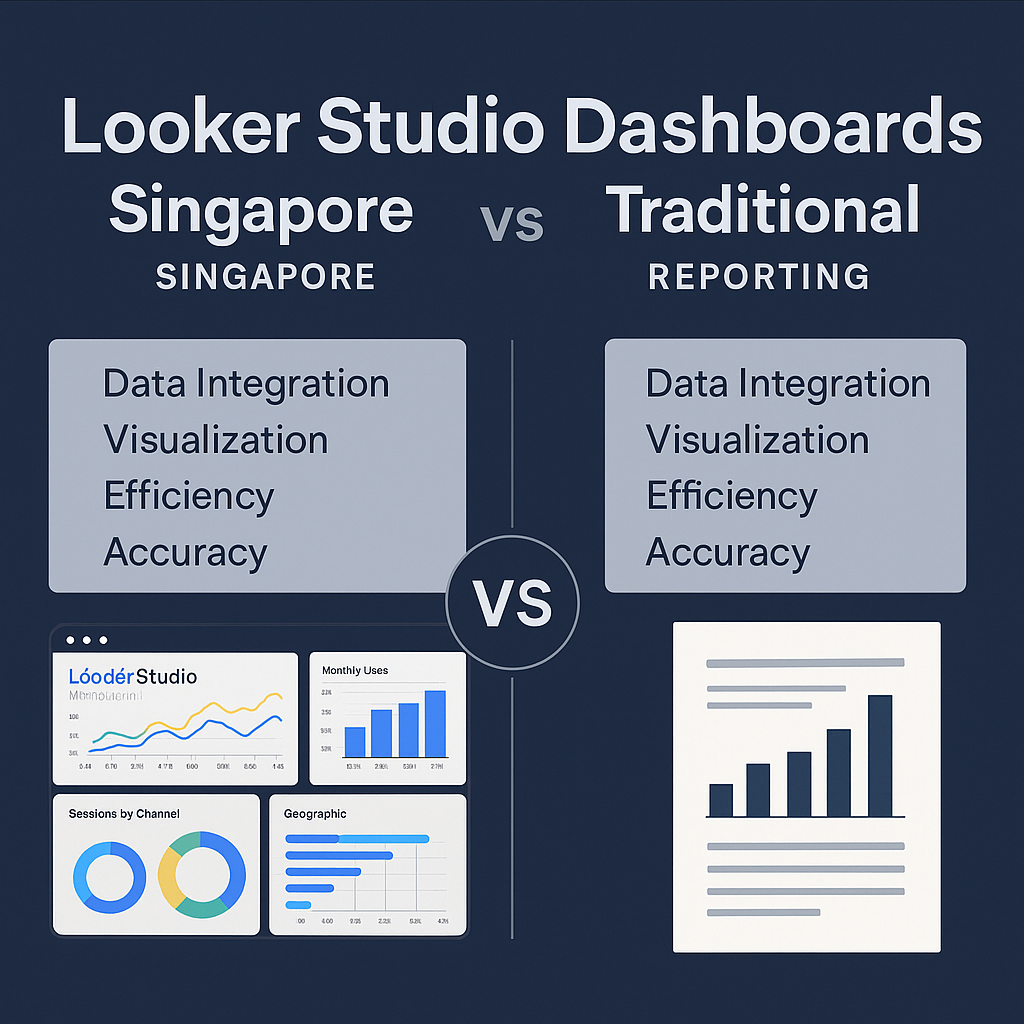
    4. Dashboard Reporting – customised Looker Studio dashboards gave real-time ROI visibility for management.

    This integrated approach followed the same data methodology discussed in this case study on digital marketing integration, showing how cross-channel insights drive exponential gains.

    The Results: From Spend to Strategy

    Within six months:
    – Leads increased by 148% across Google and Meta Ads.
    – Cost per acquisition dropped by 37%.
    – Marketing ROI rose by 212%.

    By connecting performance data across platforms, the client could finally see which campaigns generated revenue, and where to scale budget efficiently. These results mirror findings from data-driven success stories in Singapore marketing, proving that structured analytics can redefine marketing performance.

    Lessons Learned

    – ROI measurement must start before the campaign, not after.
    – Integrate Google Ads, Meta Ads, and SEO data under one dashboard.
    – Focus on cost-per-qualified-lead, not vanity metrics like clicks or impressions.
    – Invest in tracking architecture as much as in ad spend.

    When Singapore businesses connect analytics with strategy, marketing ROI shifts from an expense to a measurable growth engine.

    Conclusion: Build a Marketing Strategy That Proves Its Worth

    If your business struggles to track or justify marketing costs, it’s time to adopt an integrated framework. Let GOSG Consulting help you align SEO, Google Ads, and analytics into one growth-driven system.

    👉 Contact GOSG Consulting today and start turning your marketing spend into measurable ROI.

    FAQs

    1. What is marketing ROI in Singapore? 

    Marketing ROI measures the revenue generated for every dollar spent on campaigns. It’s especially critical in Singapore’s competitive digital space, where ad costs are rising.

    2. How can I calculate my marketing ROI? 

    Use the formula: (Revenue – Marketing Cost) ÷ Marketing Cost × 100%. Tools like Looker Studio or Google Analytics 4 simplify this process.

    3. Why is marketing ROI difficult to track?

    Many SMEs don’t integrate tracking across SEO, Google Ads, and Meta Ads. Centralised dashboards and unified UTM tracking are key.

    4. How often should marketing ROI be reviewed? 

    Monthly reviews are best to align ad spend with lead performance and make agile budget adjustments.

    5. Can GOSG Consulting help improve my marketing ROI? 

    Yes, GOSG offers integrated SEO, paid ads, and reporting solutions designed to optimise ROI for Singapore businesses.

  • UI UX Design Singapore: Best Practices for Singapore Businesses

    UI UX Design Singapore: Best Practices for Singapore Businesses

    In today’s digital-first Singapore, your website’s UI UX design determines how long users stay, how much they engage, and whether they convert. Yet, many businesses still confuse UI (User Interface) and UX (User Experience), two disciplines that work together but focus on different aspects of design.

    This article breaks down the differences between UI and UX, explores how they impact conversion and branding, and shares actionable best practices for UI UX design Singapore businesses can follow to build high-performing digital platforms.

    1. Understanding UI vs UX

    AspectUI (User Interface)UX (User Experience)
    FocusVisual elements: colours, typography, layoutUser journey, flow, and interaction
    GoalMake the interface attractive and intuitiveMake the experience seamless and satisfying
    Primary ToolsFigma, Sketch, Adobe XDUser testing, wireframes, analytics
    OutputButtons, icons, page designsNavigation, usability, and conversion paths

    Both UI and UX are essential for success, a beautiful interface means nothing without a smooth, logical experience. Learn how design strategy enhances lead generation in this GOSG website design guide.

    2. The Role of UI UX in Singapore’s Business Landscape

    Singapore’s consumers expect more than visuals, they expect performance, clarity, and speed. Brands that combine UI and UX effectively often see:
    – Higher conversion rates
    – Longer session durations
    – Stronger trust and credibility

    For instance, financial and e-commerce brands that invest in user testing and mobile responsiveness outperform competitors that rely only on visual appeal.

    Explore how digital strategy drives efficiency in this GOSG performance case study.

    3. Best Practices for UI UX Design in Singapore

    a. Prioritise Mobile-First Design

    With Singapore’s smartphone penetration exceeding 140%, responsive design is non-negotiable. Test across devices, ensuring layouts and call-to-actions adapt perfectly. Learn about conversion-friendly designs in this GOSG web optimisation article.

    b. Keep Navigation Simple and Predictable

    Users shouldn’t think twice about how to find information. Limit navigation to 5–7 main items, and keep menus consistent across pages.

    c. Design for Accessibility

    Inclusive design is becoming essential. Use proper contrast ratios, readable fonts, and ensure your site works for all users, including those with visual or motor impairments.

    d. Conduct Continuous Testing

    A design is only as strong as the feedback behind it. Use A/B testing and heatmaps to see how users interact with your site and optimise accordingly. For insights into how testing improves engagement, check this GOSG integrated marketing case.

    4. UI UX and SEO: The Overlap

    UI UX ElementSEO Benefit
    Fast-loading pagesImproves Core Web Vitals
    Mobile-friendly designBoosts rankings on Google
    Clear navigationEnhances crawlability
    Quality visuals & CTAsImproves engagement signals

    For a deeper look at how analytics strengthens both SEO and UX, visit this GOSG data insights study.

    5. Common UI UX Mistakes to Avoid

    1. Overdesigning: Too many colours or animations distract users.
    2. Ignoring mobile users: A desktop-first design alienates your main audience.
    3. Neglecting loading speed: Every second delay reduces conversions.
    4. Skipping usability testing: Assumptions rarely match real behaviour.

    Avoid these pitfalls and ensure every design decision aligns with business goals and analytics data.

    Conclusion

    Strong UI UX design Singapore practices bridge aesthetics and functionality, delivering better engagement, brand trust, and conversions. When done right, your website becomes not just beautiful but strategically effective.

    Get in touch with GOSG Consulting today to design a high-performing, conversion-focused digital experience tailored for Singapore audiences.

    FAQs

    1. What’s the difference between UI and UX?
    UI focuses on how a website looks, while UX focuses on how it feels and functions.

    2. How does UI UX design affect SEO?
    Good UX improves engagement metrics, indirectly boosting your SEO performance.

    3. Should I hire a UI UX agency in Singapore?
    Yes, a specialised agency ensures your design aligns with user behaviour and business KPIs.

    4. How often should I redesign my website?
    Typically every 2–3 years, or whenever your analytics show declining engagement or conversions.

  • Meta Ads vs Google Ads Singapore: Trends for Singapore Businesses

    Meta Ads vs Google Ads Singapore: Trends for Singapore Businesses

    In Singapore’s rapidly evolving digital economy, brands are constantly balancing between Meta Ads and Google Ads for better ROI. Both are powerful platforms, one thrives on discovery and storytelling, while the other dominates intent-based search.

    This guide breaks down how Meta Ads vs Google Ads Singapore perform across cost, targeting, and audience behaviour, helping you choose the best mix for 2025 growth.

    1. Platform Overview

    FeatureMeta Ads (Facebook & Instagram)Google Ads (Search & Display)
    Core StrengthVisual storytelling and engagementHigh-intent keyword targeting
    Best Use CaseBrand discovery, awareness, and retargetingDirect lead generation and sales
    Ad FormatsImage, carousel, video, reelsSearch, display, shopping, YouTube
    Learning CurveCreative-focusedData and keyword-driven

    Meta Ads build emotional connections through visuals, while Google Ads captures people ready to take action. Discover how smart design impacts campaign engagement in this GOSG web design insight.

    2. Targeting Capabilities

    Meta Ads:

    Meta’s Advantage+ AI targeting helps advertisers reach users beyond basic demographics by analysing purchase behaviour and content engagement. It’s ideal for lifestyle, retail, and social-driven campaigns. Learn more about data-driven ad optimisation in this GOSG analytics guide.

    Google Ads:

    Google Ads uses keyword intent and audience segments (Affinity, In-Market, Custom Audiences) to deliver ads at the exact moment users are searching. It’s perfect for high-competition sectors like finance, property, and education. See how intent-based targeting scales results in this GOSG SEO strategy article.

    3. Cost and ROI Comparison

    MetricMeta AdsGoogle Ads
    Average CPC (SGD)0.80 – 1.501.20 – 4.50
    CPM (Cost per 1,000 impressions)$10 – $18$12 – $28
    Conversion IntentLow to MediumHigh
    Best Use CaseAwareness, retargeting, storytellingDirect lead generation, e-commerce

    While Meta Ads are more cost-efficient for reach, Google Ads provides higher conversion intent. Balancing both creates full-funnel synergy. Explore how content-led campaigns drive ROI in this GOSG content marketing success case study.

    4. Creative vs Intent-Driven Advertising

    Meta Ads rely on visual creativity: bold imagery, emotional messaging, and lifestyle storytelling. It’s where brands build relationships. Google Ads is intent-driven, optimising around search behaviour, keyword accuracy, and landing page experience. It’s where brands close sales. See how Singapore businesses merge both in this GOSG integrated marketing example.

    5. Integration & Funnel Strategy

    Rather than choosing between them, successful businesses in Singapore integrate both platforms:
    1. Meta Ads: Build awareness and nurture cold audiences.
    2. Google Ads: Capture high-intent leads from retargeted traffic.
    3. Reporting Systems: Measure ROI and optimise weekly.

    For cross-channel analytics setups, read this GOSG performance measurement guide.

    6. Which Works Best for Your Business?

    Business TypeRecommended PlatformWhy
    New StartupsMeta AdsBuild brand visibility affordably
    SMEsGoogle AdsTarget high-intent leads efficiently
    E-CommerceBothRetarget on Meta, convert on Google
    B2B FirmsGoogle AdsLead generation & measurable ROI
    Retail / LifestyleMeta AdsStorytelling & audience engagement

    Conclusion

    In 2025, it’s no longer Meta Ads vs Google Ads: it’s Meta + Google Ads. Meta drives discovery, while Google converts interest into measurable sales. Combining both unlocks sustained visibility, reach, and ROI for Singapore businesses.

    Get in touch with GOSG Consulting today to create an integrated ad ecosystem that amplifies growth across all channels.

    FAQs

    1. Are Meta Ads cheaper than Google Ads?
    Yes, Meta’s CPC is usually lower, making it great for awareness and retargeting campaigns.

    2. Which platform delivers faster results?
    Google Ads drives immediate leads; Meta Ads strengthens long-term brand trust.

    3. Can both platforms work together?
    Absolutely, combining Meta and Google Ads provides the best conversion funnel.

    4. What’s the trend for 2025?
    AI-driven automation, dynamic creative optimisation, and unified ad reporting are leading trends in Singapore’s digital landscape.

  • Google Ads for SMEs Singapore: Insights for Singapore Businesses

    Google Ads for SMEs Singapore: Insights for Singapore Businesses

    For many small and medium-sized enterprises (SMEs) in Singapore, Google Ads remains one of the fastest and most cost-effective ways to generate leads and sales. Yet, many businesses struggle with wasted spend, poor ad quality scores, and unclear campaign structures.

    This checklist gives you a practical roadmap to make your Google Ads for SMEs Singapore campaigns efficient, measurable, and results-driven.

    1. Define Clear Campaign Objectives

    Before you spend a single dollar, set a measurable goal. Are you trying to:
    – Generate leads?
    – Drive e-commerce sales?
    – Increase brand awareness?

    Each objective will shape your bidding strategy, ad copy, and landing page design.

    Read more on aligning campaign goals in this GOSG Ads Management guide.

    2. Conduct Keyword Research for SME Niches

    Keywords determine your visibility, and cost. Use Google Keyword Planner or Ahrefs to identify affordable, high-intent search terms related to your business.
    Focus on:
    – Long-tail keywords (“affordable office cleaning Singapore”)
    – Local intent keywords (“near me”, “Singapore”)

    Learn how to match keywords to intent in this GOSG SEO strategy post.

    3. Set a Realistic Daily Budget

    Start small, especially for SMEs testing campaigns. A daily budget of SGD $20–$50 allows you to collect enough data without overspending.

    As you learn what converts, increase spending gradually.

    4. Optimise Ad Copy and Extensions

    Great ads win clicks, not just impressions. Write clear, keyword-focused ad headlines and include:
    – Callout Extensions (free delivery, 24/7 support)
    – Sitelink Extensions (to key pages or offers)
    – Call Extensions (for direct contact)

    To understand how ad structure impacts conversions, visit this GOSG web design for conversions guide.

    5. Use Targeted Campaign Types

    Depending on your goal, choose the right Google Ads format:
    – Search Ads: High-intent users searching for your service.
    – Display Ads: Brand awareness and remarketing.
    – Performance Max: AI-driven, cross-channel optimisation.

    Combine formats for a full-funnel strategy that targets users at every stage.

    6. Implement Conversion Tracking

    If you can’t track results, you can’t improve them. Install Google Tag Manager (GTM) and connect it with Google Analytics 4 (GA4) to track key events like:
    – Form submissions
    – Calls
    – WhatsApp clicks

    Learn how to build complete analytics systems in this GOSG reporting and analytics case study.

    7. Optimise Landing Pages for Quality Score

    Even with great ads, poor landing pages can destroy ROI. Ensure:
    – Fast loading time (<3 seconds)
    – Strong headline matching ad intent
    – Clear CTA buttons
    – Minimal distractions

    Explore effective design strategies in GOSG’s Website Design Services.

    8. Monitor and Adjust Weekly

    Every week, check key metrics like:
    – Click-Through Rate (CTR)
    – Cost Per Click (CPC)
    – Conversion Rate (CVR)
    – Return on Ad Spend (ROAS)

    Pause low-performing ads and test new ones using A/B variations. You can manage performance smarter through GOSG’s Paid Ads Services.

    9. Use Remarketing Campaigns

    Many visitors don’t convert on their first visit. Retarget them with special offers or dynamic ads showing previously viewed products.

    10. Review Monthly Performance Reports

    Create automated dashboards in Google Looker Studio for monthly campaign insights. Track performance by channel, keyword, and conversion path to understand your ROI clearly.

    You can automate monthly insights with GOSG’s Reporting Services.

    Conclusion

    For SMEs in Singapore, Google Ads can deliver high-quality leads fast, but only when structured with clarity, data, and consistency. Start small, test continuously, and optimise relentlessly for long-term ROI.

    Get in touch with GOSG Consulting today to build a Google Ads strategy that drives real business growth.

    FAQs

    1. What’s the minimum ad budget for SMEs in Singapore?
    Start with SGD $20/day and scale as performance improves.

    2. Should I use manual or automated bidding?
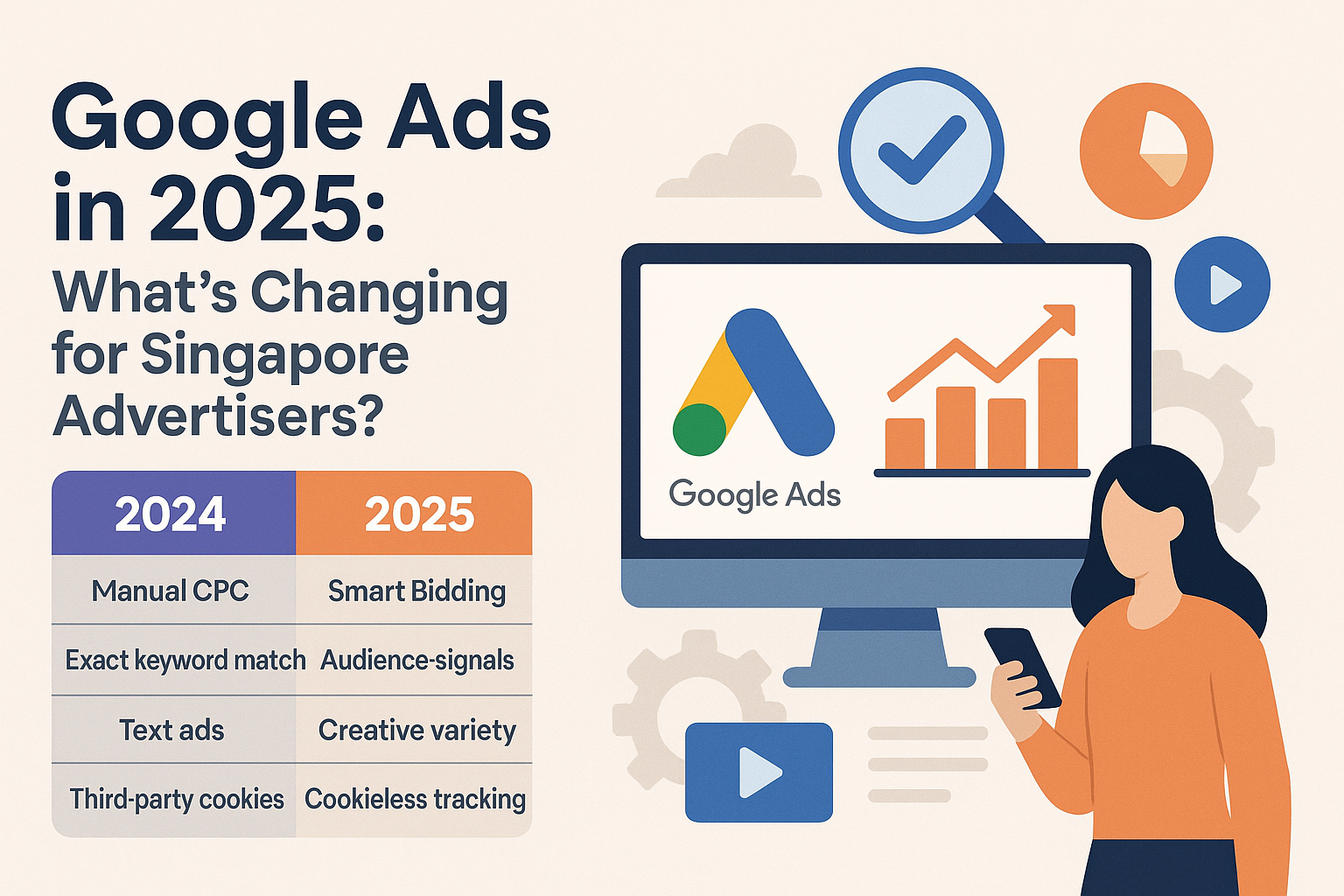
    Smart Bidding is recommended for data-rich campaigns; manual works for early testing.

    3. How do I reduce wasted ad spend?
    Use negative keywords, device targeting, and performance-based budget allocation.

    4. Can Google Ads work without a website?
    It’s possible, but landing pages always improve conversions and tracking accuracy.

  • E-Commerce SEO Singapore: Strategies for Singapore Businesses

    E-Commerce SEO Singapore: Strategies for Singapore Businesses

    The e-commerce scene in Singapore is fiercely competitive, with consumers expecting fast, seamless, and trustworthy online shopping experiences. Yet, even well-designed online stores often struggle to appear on Google’s first page.

    This case study reveals how GOSG implemented e-commerce SEO Singapore strategies for a growing online retailer, resulting in higher rankings, traffic growth, and consistent sales over 90 days.

    The Challenge: Strong Design, Weak Visibility

    Our client, a mid-sized fashion retailer in Singapore, had invested heavily in web design and paid ads but saw stagnating organic traffic.

    Their pain points included:
    – Product pages not ranking despite rich visuals
    – Missing structured data (schema markup)
    – Slow-loading mobile experience
    – Minimal internal linking and keyword optimisation

    While Google Ads drove some short-term results, organic visibility remained low, limiting profitability.

    The Strategy: Full-Funnel E-Commerce SEO Framework

    GOSG built a data-driven strategy integrating on-page optimisation, content marketing, and technical improvements. Our goal was to align the client’s online store architecture with how customers search in Singapore.

    1. Keyword and Competitor Analysis

    We began by analysing the top-performing competitors across 150+ e-commerce keywords. This uncovered key opportunities in long-tail search terms like “women’s linen dresses Singapore” and “sustainable fashion online SG.”

    Learn more about keyword mapping in this GOSG SEO framework guide.

    2. Optimised Product Page Architecture

    Each product page was restructured for better crawlability and SEO depth:
    – Optimised meta titles and descriptions
    – Added image alt-text and canonical tags
    – Consolidated duplicate URLs
    – Embedded related product internal links

    See how design and SEO integration improve lead generation in this GOSG website design article.

    3. Technical SEO and Core Web Vitals

    We improved load time by 47% through image compression, caching, and lazy loading. Structured data was implemented for product listings, prices, and reviews, increasing click-through rates in Google Shopping results.

    For performance tracking insights, check out this GOSG analytics case study.

    4. Content Marketing and Blogging Integration

    We launched a blog targeting transactional and informational keywords, such as “how to style Singapore linen outfits.” Each article linked strategically to category and product pages, boosting overall site authority.

    Learn how content amplifies e-commerce performance in this GOSG content marketing study.

    5. Backlink and Authority Building

    We secured backlinks from fashion blogs, lifestyle portals, and Singapore shopping guides. This improved the site’s domain rating by +12 points in just two months.

    The Results: 3-Month Performance Metrics

    MetricBeforeAfter 90 DaysGrowth
    Organic Traffic2,800 / month6,500 / month+132%
    Product Page Rankings (Top 10)829+262%
    Average Page Speed4.8s2.6s+46%
    Organic Conversions1.9%3.7%+95%

    Lessons Learned

    1. E-commerce SEO is ongoing. Constant optimisation of new products and categories keeps visibility strong.
    2. Technical performance matters. Google’s Core Web Vitals directly affect rankings and user engagement.
    3. Content and commerce work together. Blog-to-product linking builds topical relevance and drives sales.

    For brands seeking consistent growth, SEO delivers long-term ROI beyond paid advertising.

    Conclusion

    This case study proves that a structured e-commerce SEO Singapore strategy can transform an online store into a self-sustaining sales engine. By focusing on site architecture, content quality, and technical performance, Singapore businesses can dominate organic search in 2025 and beyond.

    Get in touch with GOSG Consulting today to create an SEO plan that drives both visibility and revenue.

    FAQs

    1. How long does e-commerce SEO take to show results?
    Expect 2–4 months for measurable improvements, depending on competition.

    2. Should I focus on category pages or product pages first?
    Start with categories, they attract higher-volume keywords and link equity flows to products.

    3. Is blogging still relevant for e-commerce?
    Yes, well-optimised content boosts both brand awareness and organic traffic.

    4. Can small stores compete with larger e-commerce brands?
    Absolutely. SEO levels the playing field through smart keyword targeting and local optimisation.

  • Lead Generation Singapore: Guide for Singapore Businesses

    Lead Generation Singapore: Guide for Singapore Businesses

    For Singapore businesses, lead generation is the heartbeat of digital growth. Whether you’re running ads, optimising SEO, or nurturing email campaigns, your ultimate goal remains the same — to convert strangers into loyal customers.

    This lead generation Singapore guide walks through proven frameworks, channels, and strategies that consistently deliver qualified leads for SMEs and corporate teams.

    1. What Is Lead Generation?

    Lead generation is the process of attracting and converting potential customers interested in your product or service. It involves creating valuable touchpoints across digital channels — from social media to SEO — to capture intent-driven traffic.

    In today’s Singapore market, effective lead generation combines:
    – Content marketing for awareness
    – SEO and PPC for visibility
    – Landing pages for conversions
    – Automation and CRM for nurturing

    For an overview of how web design impacts conversion funnels, explore this GOSG article on website design for lead generation.

    2. Core Lead Generation Channels for Singapore Businesses

    a. Search Engine Optimisation (SEO)

    SEO builds consistent, organic traffic by ranking your business for relevant keywords. It’s the foundation for sustainable long-term leads.

    See how GOSG optimises content performance in this SEO strategy guide.

    b. Google Ads (Search & Display)

    Paid search campaigns offer instant visibility and measurable ROI. By bidding on high-intent keywords, Singapore businesses can generate leads within days.

    c. Meta Ads (Facebook & Instagram)

    Social media remains a powerful platform for generating leads through visuals, videos, and storytelling. Meta Ads allow precise targeting and retargeting to drive conversions.

    d. Content Marketing

    Content establishes trust, positions authority, and educates potential customers. Case studies, guides, and comparison articles help nurture leads organically.

    e. Email and Marketing Automation

    Automation nurtures leads through scheduled emails and personalised sequences. It keeps your business top-of-mind and shortens the sales cycle.

    You can integrate email tracking and segmentation via GOSG’s Analytics & Reporting services.

    3. Optimising Your Lead Funnel

    A high-performing lead funnel includes:
    1. Attract – Reach potential customers through SEO, ads, and content
    2. Engage – Offer value via free guides, webinars, or consultations
    3. Convert – Use optimised landing pages with clear CTAs
    4. Nurture – Automate follow-ups to turn leads into clients

    For real-world insights, review this GOSG integrated marketing framework.

    4. Tracking Lead Generation Performance

    Success in lead generation depends on analytics. You should monitor:
    – Conversion rate (CVR)
    – Cost per lead (CPL)
    – Lead-to-customer ratio
    – Time to conversion

    With tools like Google Analytics 4 (GA4) and Looker Studio, businesses can visualise their ROI clearly.

    For detailed tracking methods, see GOSG’s data-driven success article.

    5. Common Mistakes to Avoid

    MistakeWhy It HurtsFix
    Poor landing page UXIncreases bounce rateOptimise design and CTAs
    No tracking setupYou can’t measure ROIImplement GA4 + Tag Manager
    Generic targetingWastes ad spendUse audience segmentation
    Weak content strategyLimits SEO growthPublish value-driven blogs

    6. Building a Long-Term Lead Generation Strategy

    Lead generation isn’t a one-time campaign, it’s an ongoing system. Successful Singapore businesses align all digital touchpoints under one goal: consistent conversion growth.

    Combine web design, SEO, and paid ads into one ecosystem for maximum efficiency.

    Get in touch with GOSG Consulting today to build a lead generation strategy that drives measurable growth.

    FAQs

    1. How long does it take to see results from lead generation in Singapore?
    Typically 2–3 months for SEO and 1–2 weeks for Google Ads campaigns.

    2. What’s the best way to capture leads?
    Use landing pages with forms, pop-ups, and lead magnets like free consultations or reports.

    3. How much budget should I allocate to lead generation?
    Start with 10–20% of your marketing spend, adjusting based on ROI.

    4. What industries benefit most from lead generation?
    Finance, real estate, education, and professional services all see strong returns.

  • E-Commerce Website Design Singapore: Tips for Singapore Businesses

    E-Commerce Website Design Singapore: Tips for Singapore Businesses

    In Singapore’s booming online marketplace, a well-designed e-commerce website is your most powerful sales tool. Yet many SMEs still struggle with low conversions, slow checkout flows, and poor mobile performance.

    This article reveals expert tips for e-commerce website design Singapore, helping businesses turn their websites into 24/7 sales engines that drive revenue and customer loyalty.

    Tip 1: Prioritise Mobile-First Design

    Over 85% of Singaporeans shop on their phones, making mobile responsiveness the foundation of all e-commerce success. Your site should adapt seamlessly across screen sizes with thumb-friendly navigation, clear CTAs, and fast loading speeds.

    Learn how user-focused design influences conversions in this GOSG website design strategy guide.

    Pro Tip:
    Use sticky navigation bars and floating “Add to Cart” buttons to reduce friction during browsing.

    Tip 2: Simplify Checkout to Reduce Cart Abandonment

    A complicated checkout is one of the biggest conversion killers. Streamline the process with:
    – Guest checkout options
    – Auto-filled form fields
    – Transparent shipping and return policies
    – Multiple payment gateways (GrabPay, PayNow, credit cards)

    For an overview of performance-driven UX approaches, explore GOSG’s Web Design services.

    Pro Tip:
    Display trust badges and SSL certificates at the payment stage to increase customer confidence.

    Tip 3: Optimise Product Pages for SEO and Conversions

    Each product page should balance aesthetics with performance:
    – Use high-resolution images (compress for speed)
    – Write SEO-optimised titles and meta descriptions
    – Add structured data for Google Shopping visibility
    – Highlight limited stock or “best seller” labels

    To learn how SEO enhances visibility and sales, check out this GOSG SEO content writing article.

    Tip 4: Leverage Personalisation and Retargeting

    E-commerce success today depends on personalising user experiences. Use data-driven recommendations like “You May Also Like” or “Recently Viewed” to keep customers engaged.

    Integrate retargeting pixels to reach visitors who didn’t complete purchases. You can see effective multi-channel retargeting models in this GOSG digital campaign insights article.

    Tip 5: Focus on Speed and Performance Analytics

    Even a 1-second delay in page loading can reduce conversions by up to 20%. Regularly audit site speed with Google PageSpeed Insights or GTmetrix. Optimise image sizes, scripts, and hosting infrastructure for maximum efficiency.

    Discover how analytics transform performance in this GOSG analytics and reporting case study.

    Common Myths About E-Commerce Website Design

    MythReality
    More features mean better design.Overloaded sites confuse users. Simplicity converts better.
    Aesthetics matter more than speed.Both matter, but speed directly impacts conversions and SEO.
    You don’t need SEO for e-commerce.SEO drives organic sales and lowers ad costs.
    Mobile users don’t buy.Mobile shoppers now account for over 70% of transactions.

    Conclusion

    A great e-commerce website design Singapore doesn’t just look good, it converts. By focusing on mobile optimisation, SEO, speed, and personalised UX, your business can achieve long-term growth in Singapore’s competitive e-commerce market.

    Get in touch with GOSG Consulting today to design a high-converting e-commerce site built for performance and measurable ROI.

    FAQs

    1. What’s the most important factor for e-commerce success in Singapore?
    Mobile optimisation and fast checkout processes.

    2. How often should I update my website design?
    Every 2–3 years or when analytics show declining conversions.

    3. Is Shopify or WooCommerce better for SMEs?
    Both work, choose based on your budget and customisation needs.

    4. Does e-commerce SEO really make a difference?
    Yes, it’s critical for visibility and consistent organic sales growth.

  • Meta Ads Targeting Singapore: Playbook for Singapore Businesses

    Meta Ads Targeting Singapore: Playbook for Singapore Businesses

    As advertising competition intensifies in 2025, Meta Ads targeting Singapore has evolved beyond basic demographics. Businesses now have access to powerful AI-driven tools that optimise ad delivery and maximise conversions, if used correctly.

    This playbook reviews how Meta’s targeting system works, its top features, pros and cons, and how Singapore SMEs can use it for real performance gains.

    Overview: Why Meta Ads Targeting Matters

    Meta Ads (Facebook + Instagram) still dominate Singapore’s digital ad ecosystem, reaching over 5.3 million users monthly. But the game has changed, audience behaviour, privacy updates, and AI automation have reshaped how brands target and engage their customers.

    For a deeper understanding of Meta Ads performance trends, read this GOSG insights post.

    Key Features and Benefits

    1. Advantage+ Audience Targeting

    Meta’s AI automatically identifies the most likely converters based on historical behaviour, even beyond your defined audience. This feature helps advertisers scale efficiently while reducing manual setup time.

    Learn how machine learning drives ROI across campaigns in this GOSG performance guide.

    2. Interest and Behaviour Segmentation

    Advertisers can still use layered targeting, combining interests, online activities, and shopping behaviour to refine audience reach. For example, a wellness brand might target “Yoga Enthusiasts” + “Singapore Expats” + “Online Shoppers.”

    To understand content alignment for niche audiences, check out this content marketing strategy case study.

    3. Custom Audiences and Retargeting

    Retargeting remains one of the most profitable features of Meta Ads. By uploading customer lists or tracking website visitors via Meta Pixel, businesses can re-engage users who already interacted with their brand.

    To implement retargeting properly, integrate Meta Pixel setup through GOSG’s Paid Ads service.

    4. Lookalike Audiences

    Once you have a base of high-value customers, Meta can create Lookalike Audiences to find users with similar behaviours. This approach is particularly effective for scaling campaigns without losing relevance.

    Pros and Cons of Meta Ads Targeting

    AspectProsCons
    AI Advantage+Saves time, optimises automaticallyRequires enough conversion data to perform well
    Interest TargetingGranular control and high relevanceManual setup can limit reach if too specific
    Custom AudiencesBoosts retention and repeat salesNeeds consistent data uploads
    Lookalike AudiencesGreat for scaling efficientlyMay overlap with existing audiences if unmanaged

    Who It’s Best For

    – E-commerce brands targeting specific purchase behaviours
    – Service providers using retargeting to re-engage visitors
    – Local businesses aiming for geo-targeted visibility

    For Singapore companies managing multiple campaigns, Meta Ads targeting offers unmatched flexibility, when paired with strategic content.

    Conclusion

    Meta Ads targeting Singapore isn’t just about choosing demographics, it’s about using AI, intent signals, and content synergy to drive measurable results. SMEs that use these tools correctly can reduce cost per conversion and reach their ideal customers faster.

    Get in touch with GOSG Consulting today to set up performance-driven Meta Ads campaigns that truly deliver.

    FAQs

    1. How accurate is Meta’s Advantage+ targeting?
    Highly accurate once sufficient data is collected; performance improves over time.

    2. Can I still manually target audiences?
    Yes, but combining manual and automated targeting yields the best results.

    3. What’s a good conversion cost benchmark?
    Varies by industry, typically SGD $8–20 per lead for local businesses.

    4. Does Meta Ads work for B2B?
    Yes, particularly through custom audiences and lookalikes built from CRM data.

  • Google Ads Budget Singapore: Roadmap for Singapore Businesses

    Google Ads Budget Singapore: Roadmap for Singapore Businesses

    Running Google Ads without a clear budget plan is like driving without GPS, you’ll spend money but may not reach your destination. In Singapore’s competitive ad market, setting the right Google Ads budget Singapore is essential for balancing cost and performance.

    This step-by-step guide outlines how to plan, allocate, and optimise your ad spend to achieve measurable ROI, no wasted clicks, no guesswork.

    Step 1: Define Your Campaign Objectives

    Before deciding how much to spend, identify what you’re trying to achieve:
    – Lead generation for services
    – E-commerce sales
    – Brand awareness
    – Website traffic

    Each objective requires different bidding strategies and daily budgets. For example, conversion-based campaigns need higher bids than awareness ads.

    Learn how campaign goals shape strategy in this GOSG Google Ads management guide.

    Step 2: Calculate Your Ideal Daily Budget

    Start with your target monthly ad spend, then divide it by 30.4 (average days in a month).
    Use the formula below:

    Daily Budget = Monthly Budget ÷ 30.4

    Example: If you plan to spend SGD $1,200/month, your daily budget will be about $39/day.

    Pro Tip: Begin with smaller test campaigns for 1–2 weeks to gauge CPC (Cost Per Click) and conversion rate before scaling.

    Get a full understanding of ROI analysis through GOSG’s Paid Ads service.

    Step 3: Understand Cost-Per-Click (CPC) in Singapore

    Average CPCs vary depending on the industry:

    IndustryAverage CPC (SGD)Competition Level
    E-commerce0.80 – 2.00Medium
    Education1.50 – 3.00High
    Finance / Insurance4.00 – 8.00Very High
    F&B / Retail0.70 – 1.50Low to Medium


    To stay competitive, monitor the “Top of Page Bid (Low/High Range)” metrics in your Google Ads dashboard. For keyword efficiency strategies, explore this GOSG SEO content guide.

    Step 4: Allocate Budget by Campaign Type

    A balanced Google Ads account typically includes:
    – Search Ads (40–60%) — high-intent traffic
    – Display Ads (20–30%) — brand awareness and remarketing
    – Performance Max (10–20%) — automated full-funnel optimisation

    Keep at least 10–15% of your total monthly budget for A/B testing new ad copy, creatives, and audience segments.

    For examples of integrated ad performance, read this GOSG ROI-focused campaign article.

    Step 5: Track Conversions and Adjust Weekly

    Never set a Google Ads budget and forget it. Use Google Analytics 4 (GA4) or Looker Studio dashboards to track metrics like:
    – Cost per acquisition (CPA)
    – Conversion rate
    – Return on ad spend (ROAS)

    If a campaign exceeds your target CPA, lower bids or pause underperforming keywords.

    For automated reporting and tracking solutions, view GOSG’s Reporting & Analytics service.

    Step 6: Consider External Factors and Seasonality

    In Singapore, ad competition peaks during events like:
    – Lunar New Year
    – 11.11 & 12.12 sales
    – Christmas / Holiday shopping

    Increase your budget by 15–20% during these high-conversion windows to stay visible. Then, scale back during slower months to maintain efficiency.

    Step 7: Review and Optimise Monthly

    Every 30 days, review:
    – Which campaigns generated the best CPA
    – Which keywords produced low ROI
    – Whether your conversions align with your business goals

    Continue reallocating budget toward top-performing segments. This ensures your money consistently supports profitable clicks.

    Conclusion

    Setting your Google Ads budget Singapore strategically ensures your marketing dollars work smarter, not harder. When you monitor performance, allocate wisely, and adjust regularly, you’ll achieve predictable results and sustainable ROI.

    Get in touch with GOSG Consulting today to build and manage Google Ads campaigns that deliver measurable returns.

    FAQs

    1. What’s the minimum budget to start Google Ads in Singapore?
    Start from SGD $20/day, then scale once you gather performance data.

    2. Should I use automated bidding?
    Yes, Google’s Smart Bidding optimises based on performance data, but it works best with consistent conversions.

    3. How often should I adjust my Google Ads budget?
    Review every 2–4 weeks depending on data volume and campaign goals.

    4. What’s the best ROI benchmark?
    Most SMEs aim for 3x–5x ROAS (Return on Ad Spend).


  • On-Page SEO Singapore: Checklist for Singapore Businesses

    On-Page SEO Singapore: Checklist for Singapore Businesses

    In Singapore’s competitive search landscape, every detail on your website matters. From title tags to image alt-text, effective on-page SEO Singapore practices can mean the difference between page one visibility and being buried in search results.

    This checklist helps Singapore SMEs audit and optimise every key element for stronger rankings and higher click-through rates.

    1. Optimise Your Title Tags and Meta Descriptions

    Your title tag is the first thing users see on Google. Keep it under 60 characters and include your main keyword near the beginning. Meta descriptions should stay under 150 characters and focus on enticing users to click.

    Example:
    Meta Title: On-Page SEO Singapore | Complete Optimisation Checklist
    Meta Description: Master on-page SEO Singapore with this practical checklist for higher rankings and engagement.

    For inspiration, view this GOSG SEO content strategy article.

    2. Structure Headings (H1–H3) for Readability

    Each page should have one H1 tag (your main topic) followed by logical H2s and H3s. Well-structured headings help Google understand content hierarchy while improving user experience.

    Learn how clear structure enhances engagement in this GOSG web design guide.

    3. Optimise Images with Alt Text and File Names

    Google can’t “see” images, it reads descriptions. Rename image files using descriptive keywords (e.g., on-page-seo-singapore-checklist.jpg) and always include alt text.

    Alt text not only improves accessibility but also helps images appear in Google Image results.

    4. Internal Linking for Site Authority

    Internal links connect your content and help search engines discover related pages. Aim for at least 2–3 internal links per post, linking to both blogs and service pages naturally.

    For an example of strong internal linking strategy, read this GOSG SEO framework.

    5. Use Keyword Placement Strategically

    Place your target keyword in:
    – Title tag
    – H1 heading
    – First 100 words
    – 1–2 subheadings
    – Image alt text
    – URL slug

    However, avoid keyword stuffing, Google values context and readability.

    For balanced keyword optimisation, explore GOSG’s SEO Services.

    6. Improve Page Speed and Mobile Experience

    A slow website frustrates users and lowers your SEO rankings. Use Google PageSpeed Insights or GTmetrix to identify performance bottlenecks like large image files or unoptimised code.

    Ensure your site design is responsive across all devices, especially since over 90% of Singapore’s traffic comes from mobile users.

    You can learn about speed optimisation impact in this GOSG analytics and performance article.

    7. Add Schema Markup and Structured Data

    Schema markup helps search engines understand your content type (articles, reviews, FAQs, etc.). It also increases your chances of appearing in rich snippets and AI search overviews.

    For technical SEO schema setup, check out GOSG’s Reporting and Technical SEO service.

    8. Ensure Secure HTTPS and Clean URLs

    Google favours secure websites. Ensure your SSL certificate is active and all pages load via HTTPS. Keep URLs short and keyword-rich.

    ✅ www.example.com/on-page-seo-singapore
    ❌ www.example.com/page?id=1234

    9. Write for Users, Not Just Algorithms

    SEO-friendly doesn’t mean robotic. Write naturally, provide value, and solve real user problems. Longer dwell times and lower bounce rates send positive ranking signals to Google.

    10. Track, Measure, and Iterate

    Use Google Search Console and Looker Studio dashboards to monitor keyword positions, impressions, and CTR. Regularly refresh old posts and add internal links to new content to maintain authority.

    See how analytics improve long-term SEO results in this GOSG integrated campaign case study.

    Conclusion

    Implementing this on-page SEO Singapore checklist ensures every aspect of your website supports your visibility and conversions. By focusing on technical precision, content relevance, and consistent measurement, your business can achieve sustainable organic growth.

    Get in touch with GOSG Consulting today to audit and optimise your on-page SEO for lasting results.

    FAQs

    1. What is on-page SEO?
    It refers to optimising individual web pages for better rankings and user experience.

    2. How often should I review my SEO pages?
    Every 3–6 months to keep up with algorithm updates and search trends.

    3. Is keyword density still important?
    Yes, but moderation is key: 1–2% keyword density is sufficient.

    4. Can I do on-page SEO myself?
    Yes, but expert audits ensure no key technical elements are missed.