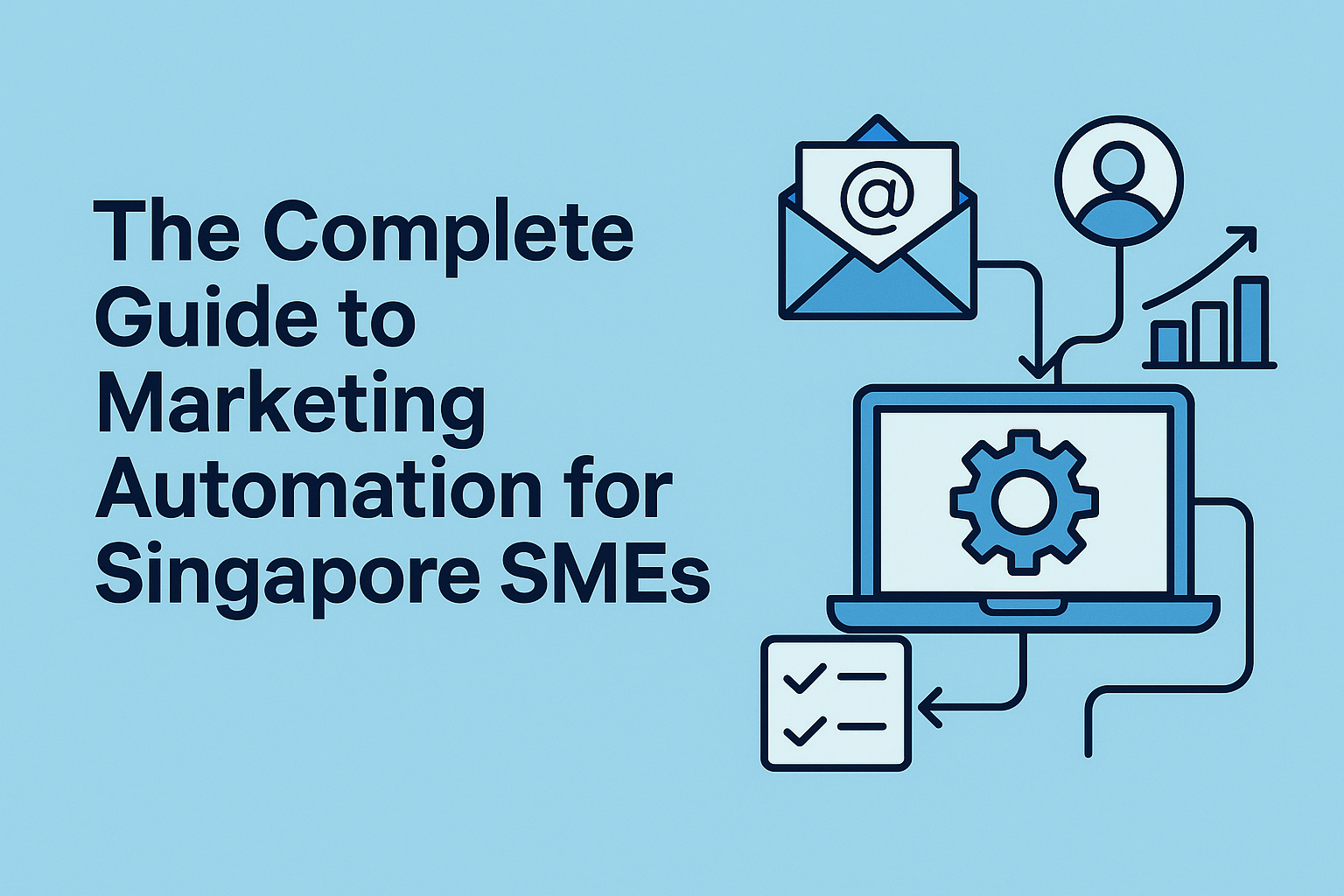
Introduction: Why Marketing Automation Matters Now More Than Ever
Marketing automation Singapore strategies are becoming essential as SMEs juggle multiple channels, rising ad costs, and increasing customer expectations. Manual workflows are no longer enough. To scale effectively, businesses need automated systems that nurture leads, personalise communication, and deliver real-time insights without adding manpower.
This complete guide explains how marketing automation works, the tools you need, the workflows that matter, and how Singapore SMEs can use automation to drive predictable, scalable growth.
1. What Is Marketing Automation?
Marketing automation is the use of software to automate repetitive marketing tasks such as:
- lead nurturing
- email follow-ups
- campaign segmentation
- ad optimisation
- customer lifecycle messaging
- reporting and analytics
Automation helps SMEs reduce manual work, increase personalisation, and improve conversion rates by sending the right message at the right time.
A strong automation foundation is often supported by strategic frameworks like those demonstrated in Content Marketing Singapore 2025: Website Design for Lead Generation.
2. Benefits of Marketing Automation for Singapore SMEs
✔ Higher Lead Conversion Rates
Automated follow-ups increase the chance of converting cold leads into warm prospects.
✔ Better Personalisation at Scale
Segmentation and behavioural triggers allow dynamic messaging without extra manpower.
✔ Time Savings for Lean Teams
SMEs can automate 30–60% of manual marketing tasks, freeing up time for strategy.
✔ Improved Customer Experience
Automation supports timely communication, faster responses, and consistent brand interactions.
✔ Stronger SEO & Content Performance
When paired with content-led systems, automation enhances engagement and repeat traffic.
This aligns with the principles behind Strategic SEO Content Writing: Amplifying Singapore Business Success.
3. Key Components of a Marketing Automation System
Email Automation
Schedule welcome sequences, nurture flows, win-back campaigns, and promotional emails.
Lead Scoring
Automatically score leads based on behaviour (opens, clicks, website visits) to prioritise follow-up.
Customer Journey Mapping
Define every step between “first contact” and “paying customer”.
CRM Integration
Centralises customer data, enabling personalised automation based on behaviour.
Reporting Dashboards
Automated analytics help SMEs connect campaign performance to revenue.
A consolidated measurement structure follows similar principles highlighted in SEO Agency Singapore: Strategies for Singapore Businesses.
4. Popular Marketing Automation Tools for SMEs
Email + CRM
- HubSpot
- Klaviyo
- Mailchimp
- ActiveCampaign
Ad Automation Tools
- Meta Ads automation rules
- Google Ads automated bidding
- Performance Max workflows
Analytics + Reporting Tools
- GA4
- Looker Studio
- Heatmaps (Hotjar, Clarity)
E-Commerce Automation
- Shopify Flow
- WooCommerce integrations
- Automated review systems
5. Marketing Automation Workflows Every SME Should Use
1. Welcome Sequence
Triggered when someone joins your newsletter or downloads a guide.
2. Lead Nurturing Funnel
Drips content and value over days or weeks to warm up cold leads.
3. Abandoned Cart Recovery
Recovers lost revenue for e-commerce stores with automated reminders.
4. Retargeting Automation
Synchronises audiences between Meta Ads, Google Ads, and CRM.
5. Customer Upsell/Win-Back Automation
Targets inactive or past customers with relevant offers.
6. Automated Reporting Dashboards
Collects data from ads, SEO, and CRM into a centralised view.
6. How to Build Your Marketing Automation Strategy
Step 1: Audit Your Current Funnel
Identify bottlenecks in traffic, conversion, and retention.
Step 2: Define the Customer Journey
Clarify what happens at each touchpoint and where automation can help.
Step 3: Choose the Right Tools
Ensure your automation stack integrates with your CMS and CRM.
Step 4: Build Segments & Triggers
Segment by intent, behaviour, demographics, and lifecycle stage.
Step 5: Create Content for Each Stage
Emails, product education, case studies, guides, and retargeting messages.
Step 6: Set Up Analytics & Dashboards
Connect GA4, Looker Studio, CRM, and ad platforms to measure performance.
Step 7: Optimise Monthly
Review open rates, ROAS, CTR, and lead quality to refine messaging and targeting.
For brands needing help aligning automation with website performance and lead funnels, the GOSG homepage offers a clear overview of integrated solutions.
7. Common Marketing Automation Mistakes to Avoid
- Over-automating before fixing your funnel
- Sending too many emails too quickly
- Not mapping out customer segments
- Ignoring reporting or tracking setup
- Using automation without strong content
- Treating all leads the same
- Failing to optimise regularly
Conclusion
Marketing automation Singapore strategies help SMEs work smarter, scale faster, and build predictable revenue systems. When implemented correctly, automation enhances every part of your marketing stack, from SEO and content to paid ads and CRM.
If your SME wants help building automated funnels,
👉 Contact GOSG Consulting
and start building a fully automated, high-performing marketing system.
Leave a Reply